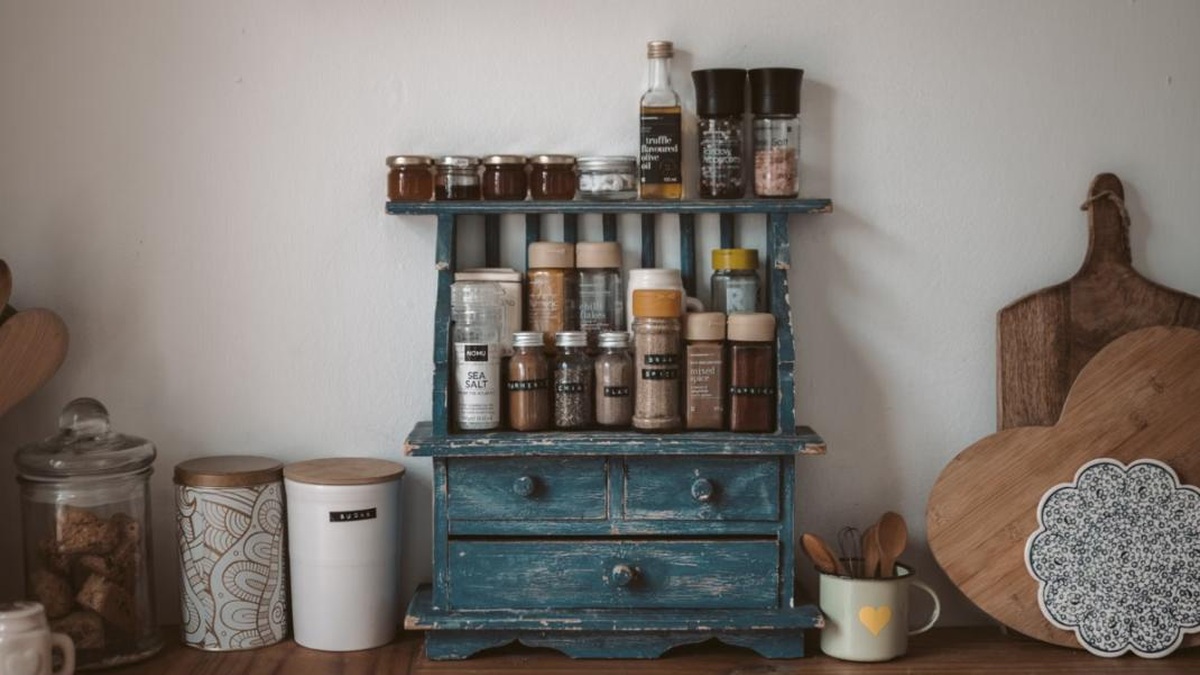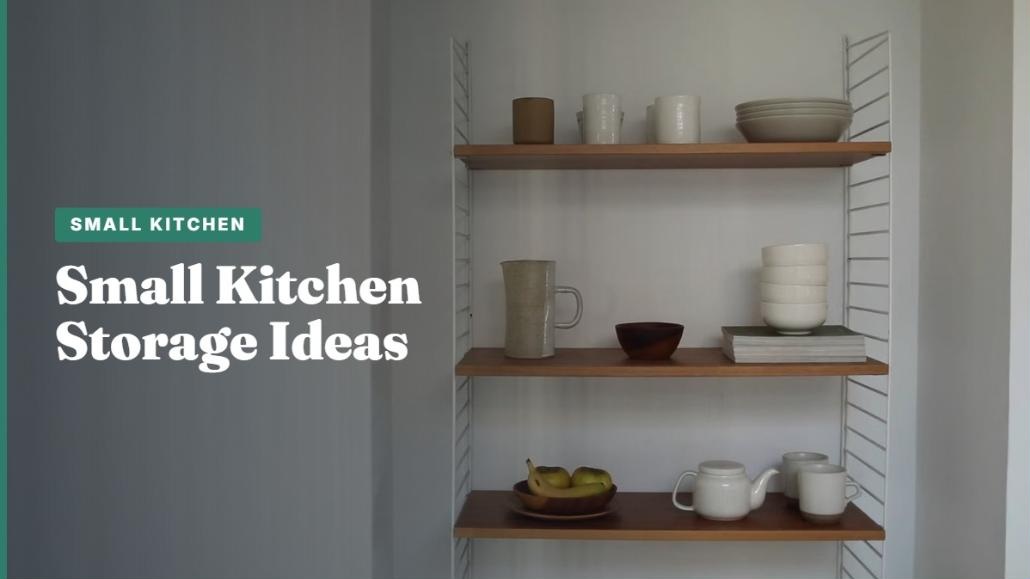
The problem with a small kitchen is never that you own too many pots. It's that a standard kitchen is built as a handful of tall, deep boxes — cabinets, drawers, one skinny pantry — and none of them are packed anywhere near full. Half the height inside every cabinet sits empty above the plates. The back of every deep shelf is a dark zone you rediscover when something expires. The backs of the doors, the walls, the toe-kick, the gap beside the fridge — all of it is storage you already own and aren't using. Fix the geometry rather than buying a bigger kitchen, and a tiny one holds far more than it looks like it should. Here's the whole system.
To get more storage out of a small kitchen, use the vertical air in every cabinet, bring the back of deep shelves to the front, and put the doors and walls to work. Add shelf risers and tiered organizers so nothing has empty space above it, put lazy Susans and pull-out bins on deep shelves, hang racks on cabinet doors, and roll a slim cart into any gap. That's most of the gain, and almost none of it needs tools.
Use the vertical air in cabinets
Open any cabinet in a small kitchen and look at it from the side: a row of plates or cans with four to six inches of dead air above them, then the next shelf. That air is storage you already paid for. Two cheap tools reclaim it. Shelf risers — little wire or acrylic platforms — create a second level, so short jars and mugs go up top and the space underneath stays usable. Tiered organizers stair-step cans and spices so you can read every label instead of excavating the back row.
The rule is simple: no item should have more than an inch or two of empty space above it. If it does, something belongs on top of it. Stacking shelves, under-shelf baskets, and adjustable racks are how you turn one flat cabinet floor into two or three usable levels. Our full breakdown lives in the small kitchen cabinet organizers guide, and the pantry version — risers, tiered can stands, decanting — is covered in small pantry organization.
Fix the deep-shelf black hole
Deep cabinets and pantry shelves are where good intentions go to die. You can reach the front foot; everything behind it is a mystery until it's a year past date. You don't need shallower shelves — you need the back to come to the front. A lazy Susan spins the back row into reach and handles oils, sauces, and jars beautifully. For the shelves a turntable doesn't suit, pull-out bins or baskets work like drawers: grab the handle and the whole thing slides out, so you see the back row without unloading the front. Group like with like in each bin — baking here, snacks there — so one pull gets you everything for a task.
The test: you should never have to move a front item to see or reach a back one. If you do, that shelf needs a turntable or a pull-out. The best pantry-specific versions of all of this are in our best pantry organizers roundup.
Put the doors and walls to work
When the shelves are full, the doors and walls are still empty. The inside of a cabinet or pantry door holds a whole column of shallow storage — an over-the-door rack hangs there with no tools and is perfect for spices, foil and wrap boxes, and small packets, all visible because nothing hides behind anything. See our over-the-door organizers guide for which style holds what.
Bare wall is the other frontier. A magnetic strip holds knives or spice tins off the counter; a short rail with S-hooks hangs mugs, utensils, and pot lids; a pegboard turns a blank wall into hanging storage you rearrange at will. Getting tools and pans onto the wall is what frees the drawers and counter for everything else — the same "go vertical" logic that runs through making a small room look bigger, applied to a kitchen.
Reclaim the under-sink jungle
Under the sink is the single most wasted cabinet in the kitchen, because the plumbing splits the space and everyone just piles bottles around the pipes. An expandable or two-tier under-sink organizer works around the P-trap and adds a second level, turning a chaotic floor into real shelving. Add a tension rod across the top to hang spray bottles by their triggers, and a small bin for sponges and brushes on the door. Suddenly the cabinet that held a jumble holds twice as much, neatly.
Buy counter space you don't have
Counter space is the currency of a small kitchen, and the fastest way to get more is to stop storing things on it. Move the knife block to a magnetic strip, the utensils to a wall rail, the spices to a door rack, and the small appliances you use weekly (not daily) into a cabinet. Then, if you still need a work surface, a slim rolling cart is the answer: it parks in the gap beside the fridge or under a window, rolls out to become prep space when you cook, and stores a microwave or pantry overflow the rest of the time. A cart is the closest thing a small kitchen has to a movable island — we cover the options in kitchen carts for small kitchens, and the whole no-counter problem in organizing a tiny kitchen with no counter space.
Small-kitchen storage cheat-sheet
Where the wasted space hides in a small kitchen, and the fix for each:
| Wasted space | The fix | What it holds |
|---|---|---|
| Air above items in cabinets | Shelf risers / stacking shelves | Mugs, cans, short jars up top |
| Back of deep shelves | Lazy Susan / pull-out bins | Oils, sauces, grouped staples |
| Inside of cabinet & pantry doors | Over-the-door rack | Spices, foil, wraps, packets |
| Bare wall | Magnetic strip / rail / pegboard | Knives, utensils, mugs, lids |
| Under the sink | Expandable 2-tier organizer + tension rod | Cleaning supplies, spray bottles |
| Gap beside fridge / under window | Slim rolling cart | Microwave, prep surface, overflow |
| Under a shelf | Under-shelf baskets | Wraps, linens, coffee pods |
The move most people skip is the doors — every cabinet and pantry door in a small kitchen is a full column of storage sitting empty. Hang those first; it's the fastest win.
Common questions
How do you get more storage in a small kitchen without a pantry?
Treat one cabinet as the pantry and max it out with shelf risers, a tiered can stand, and a lazy Susan, then push overflow onto the back of the door with an over-the-door rack and onto a wall shelf. A slim rolling cart can serve as a movable pantry-plus-prep station. The whole approach is the same as any small kitchen: use the vertical space and the doors, not just the shelves.
What is the best way to organize a small kitchen with few cabinets?
Go vertical and go onto the walls. Add risers and stacking shelves so every cabinet holds two or three levels instead of one, hang a rail and a magnetic strip to move utensils and knives off the counter and out of drawers, and put a rack on the inside of each door. Then a rolling cart adds both storage and a prep surface without a renovation. Fewer cabinets just means leaning harder on doors, walls, and vertical air.
How do I create more counter space in a tiny kitchen?
Get everything off the counter that can live somewhere else: knives to a magnetic strip, utensils to a wall rail, spices to a door rack, weekly appliances into a cabinet. Then add a movable surface — an over-the-sink cutting board or a slim rolling cart — that gives you prep space on demand and disappears when you're done. The counter isn't for storage; it's for working.
Our product picks
SONGMICS Cabinet Shelf Risers (Set of 4)
Four stackable racks add a second level to any cabinet shelf so short jars and cans stop wasting the air above them — the cheapest way to nearly double a cabinet's capacity. Adjustable width for odd cabinets.
Check price on Amazon →Pull-Out Cabinet Organizer, 21" Deep (2-Pack)
Slides out like a drawer so you reach the back of a deep cabinet without unloading the front. Group each one by task — baking, snacks, canned goods — so one pull gets you everything.
Check price on Amazon →Delamu Over-the-Door Pantry Organizer (6-Tier)
Six metal tiers hang on the inside of a cabinet or pantry door for a full column of shallow, everything-visible storage — spices, wraps, and packets. Hooks over the door or mounts to the wall.
Check price on Amazon →Pipishell 3-Tier Slim Rolling Cart
Parks in the gap beside the fridge and rolls out to become prep space or a movable pantry when you cook. The closest thing a small kitchen has to an island, at a fraction of the size.
Check price on Amazon →Under-Shelf Wire Baskets (3-Pack)
Slide onto an existing shelf and hang a whole layer of storage from the underside — wraps, linens, coffee pods — using space that was doing nothing. No tools, no drilling.
Check price on Amazon →Start with the doors and the vertical air — hang a rack on every cabinet door and add risers to every shelf before you buy anything bigger. Most small-kitchen crowding is just empty vertical space and unused doors; once they're working, you'll know exactly what else, if anything, you actually need.