The problem with a tiny kitchen usually isn't how much it holds. It's access. Counters vanish under appliances you use twice a week, the back half of every cabinet is a mystery, and the walls sit empty. Fix those three in the right order and a galley you can barely turn around in starts to work like a real kitchen.
The order that works: clear the counters of anything you don't use daily, move storage up onto walls and pegboards, mine the inside of every cabinet door, then reclaim the wasted back-half of your cabinets with pull-outs and risers. Counters first, because that's the space you feel every day.
Clear the counters first
Counter space is the most valuable real estate you own, so the rule is simple: nothing lives on it unless you use it every day. The stand mixer, the blender, the twice-a-week air fryer, all of it moves to a cabinet or a shelf. You lose ten seconds pulling it out and gain a work surface you use constantly.
The biggest single win costs a few dollars. An over-the-sink roll-up drying rack sits across the sink while you wash and rolls away when the dishes dry, handing back the whole zone a dish rack used to squat on. From there, knives go to a wall-mounted magnetic strip and paper towels to an under-cabinet holder.
Move it up the walls
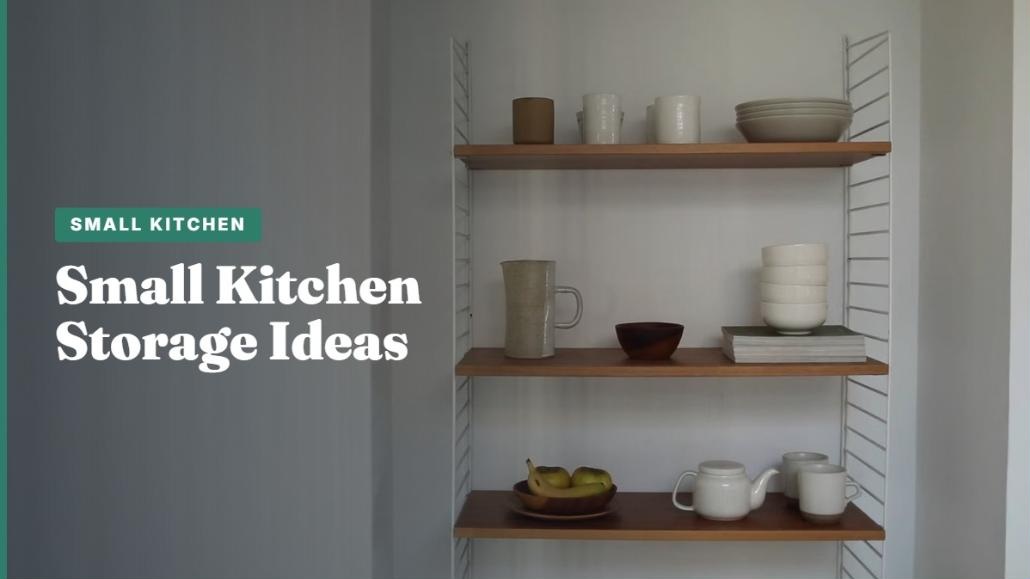
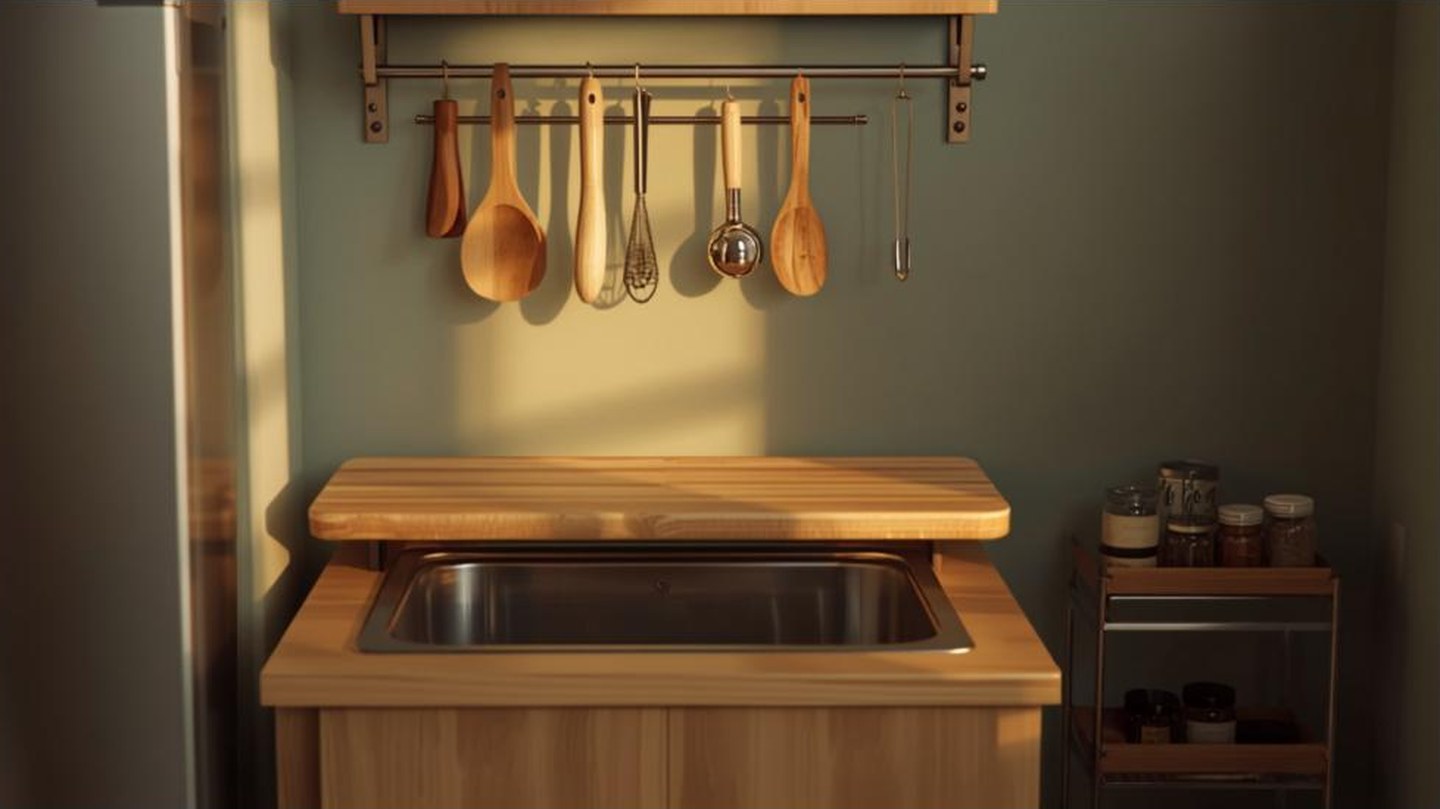
Empty wall is unused storage, and a tiny kitchen has more of it than you think. A pegboard turns a bare wall into hanging storage for pots, pans, utensils, and mugs, all visible and grabbable; a rail with S-hooks does a lighter version without committing to a full board. Floating shelves above the counter hold everyday dishes and can free up a whole cabinet. The piece that surprises people is a slim rolling cart that slides into the 6-to-9-inch gap beside the fridge, pulling three tiers of storage out of a slot you were ignoring. Wall mounting means drilling, so if you rent, clear it with your landlord or lean on tension rods and adhesive mounts instead.
Mine the cabinet doors
The inside of every cabinet door is prime, forgotten storage. Over-the-door racks and adhesive bins give pot lids, cutting boards, foil and wrap, sponges, and cleaning spray a home, and on a door with real dead space that adds close to another shelf's worth of room. Just check the door still shuts once it's loaded. (The trick works all over a small home. See our guide to the best over-the-door organizers.)
Fix the cabinet black holes
Deep cabinets waste their back half because you can't reach it. Pull-out drawers and sliding bins clip under a shelf and bring that back row to you, so there's no more kneeling and reaching past the front. Shelf risers split a tall shelf into two reachable layers, so plates and cans stop burying each other. In a corner cabinet, a lazy Susan spins dead space into reach. And under the sink, a two-tier expandable shelf works around the pipes to reclaim the spot most people write off entirely.
What quietly wastes your space
Two habits undo the work. Buying more storage bins before decluttering, when half the problem in a tiny kitchen is owning three spatulas and two colanders: thin the herd first, then organize what's left. And leaving a rarely-used appliance out because there's nowhere else, when there is, it's the cabinet you just freed up.
Common questions
How do I get more counter space in a small kitchen?
Take things off the counter rather than trying to add surface. Past clearing the dish rack and the appliances, remember the sink is surface too: a board that sits across it turns the basin into a cutting station, and a slim rolling cart gives you a movable counter you tuck away after.
Where do you put things in a kitchen with no cabinets?
Go vertical and use doors. A pegboard or rail holds pots, utensils, and mugs; over-the-door racks hold lids and wraps; floating shelves and a rolling cart take the rest. Renters can get most of it with no drilling using tension rods and adhesive mounts, just buy for the weight and know kitchen humidity loosens cheap adhesive over time.
Are shelf risers worth it?
They're one of the cheapest, highest-impact fixes in a small kitchen, and worth buying before any new bins. One thing to check first: measure the shelf's internal height, because a riser that leaves less than a plate's clearance beneath it just relocates the problem.
Our product picks
Roll-Up Over-the-Sink Dish Drying Rack
Reclaims your dish rack's footprint the day it arrives and rolls away when the dishes are dry. One of the best few dollars a tiny kitchen can spend.
Check price on Amazon →Pipishell 3-Tier Slim Rolling Cart
Slides into the dead gap beside the fridge or counter and pulls out three tiers of storage, plus a movable work surface when you need one.
Check price on Amazon →Pull-Out Cabinet Organizer, 21" Deep (2-Pack)
Clip under existing shelves to reach the wasted back half of every cabinet. Pair with shelf risers for the full effect.
Check price on Amazon →Work counters, walls, doors, then cabinet interiors, and stop when the kitchen finally works. You'll usually get there long before you run out of wall.