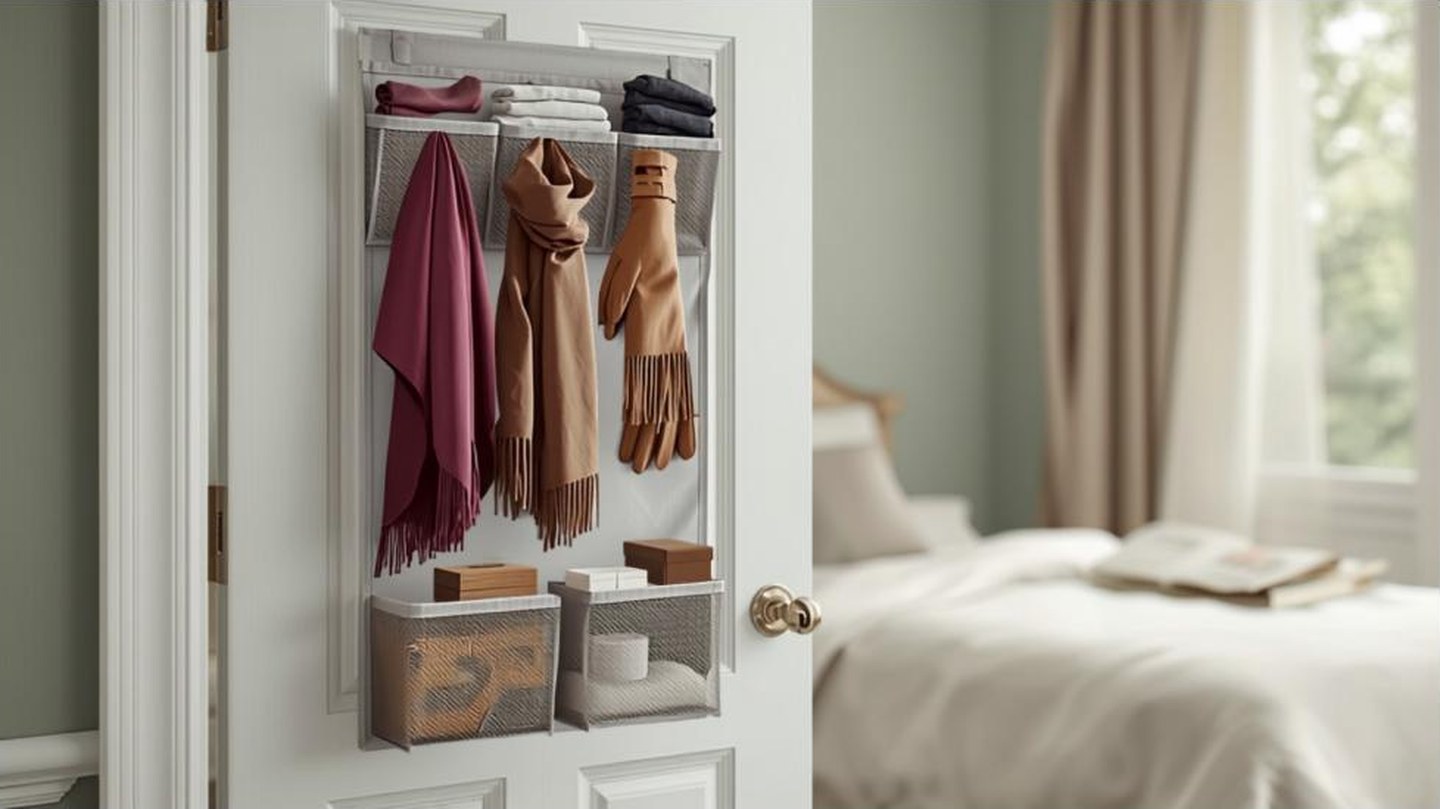
Look at any door in your apartment. That's a vertical wall of storage doing almost nothing. Over-the-door organizers are one of the best returns per dollar in small-space living: no tools, no holes, no floor space, and they come with you when you move. The only trick is matching the right style to the right door, because the wrong pick just ends up in the closet you were trying to declutter.
For most people, a clear-pocket organizer is the one to start with. You can see what's in it, it fits shoes, toiletries, or pantry packets, and it hangs on any standard interior door in seconds. For heavier or bulkier loads, step up to an adjustable wire-basket rack.
How to choose (three things that matter)
Three variables decide whether an organizer earns its spot or ends up in a drawer.
Door thickness and clearance. Measure your door. Most interior doors are about 1⅜ inches, which standard over-the-door hooks are built for. If yours is thicker (a solid or exterior door), or the hooks would hit the frame or a nearby wall, look for a rack with adjustable over-the-top brackets. Then check the door still latches with the organizer loaded: a bulky rack on a pantry door that sits close to a wall can stop it closing.
Pockets vs. baskets vs. hooks. Clear pockets suit small things you want to see: spices, cosmetics, craft supplies, packet foods. Wire baskets take bulkier or heavier pantry goods and cleaning bottles. Plain hook racks are for coats, bags, and towels. Match the style to what you're storing, not to the prettiest photo.
Weight and rattle. Keep the heaviest items in the lowest pockets and stay within the rating: an overloaded organizer stretches its pockets and can dent the top edge of the door, bad news for a deposit. The detail nobody mentions: a loaded rack rattles against the door every time you open it, and that gets old fast. Foam bumpers or a snug adjustable fit keep it quiet.
Best for shoes & the entryway
The clear-pocket shoe organizer is the classic, and it's wasted on shoes alone. Behind your front door it becomes command central: keys, gloves, sunscreen, umbrellas, the dog's leash and poop bags. In a bedroom closet, the same organizer holds a full accessory collection (scarves, belts, sunglasses) where you can actually see it. For heavier boots, get reinforced pockets, because the flimsy ones sag and tear at the seams.
Best for the pantry & kitchen
Mount a wire or basket rack inside your pantry door (or an under-sink cabinet door) and you add close to a week's worth of food storage in an afternoon, on a surface that was doing nothing. Cans, boxes, spices, foil and wrap all live here. The feature worth paying for is adjustable basket spacing, so a tall cereal box and a short spice jar each get a row that fits.
Best for the bathroom
In a rental bathroom with no cabinet, a clear-pocket organizer on the back of the door holds a household's worth of toiletries off the counter. The rule that's specific here: choose water-resistant material and a rustproof frame, because a cheap metal rack in a steamy bathroom will streak rust down your door within a season. Pairs well with the rest of our small-bathroom storage ideas.
Common questions
How much weight can an over-the-door organizer hold?
A fabric clear-pocket organizer is happiest under about 30 to 40 pounds spread across its pockets. A steel wire rack holds more, but it pushes all of that load onto the two hook points at the top edge of the door, so check the listed rating rather than guessing from how sturdy it looks.
Do they work on sliding or bifold closet doors?
No. Over-the-door racks need a standard hinged door with a free top edge to hook over. On a sliding or bifold door, a tension rod across the frame or a couple of adhesive hooks does a similar job without fouling the track.
Our product picks
Simple Houseware 24-Pocket Over-the-Door Organizer
The do-everything pick: shoes, toiletries, craft supplies, or pantry packets. Clear pockets mean you actually find what you stored. Get reinforced ones for heavier loads.
Check price on Amazon →Delamu 6-Tier Over-the-Door Basket Rack
Adjustable baskets for cans, boxes, and spices on a pantry or cabinet door. Check the basket depth against your door clearance.
Check price on Amazon →Adjustable Over-the-Door Hook Organizer
Fits thicker or non-standard doors and stops the organizer rattling every time the door moves. The upgrade worth making if your door isn't standard.
Check price on Amazon →Start with the door you open most, usually the pantry or the bedroom closet. One afternoon, and you've found a wall of storage that was hiding in plain sight.