In a small kitchen the drawers are some of the most valuable storage you own, and almost all of them are chaos — a loose tangle of forks and whisks, a junk drawer nothing can be found in, a deep drawer with a single layer of stuff sliding around a vast empty space. The fix isn't more drawers; it's making the ones you have hold two or three times as much, with every item in a dedicated slot you can grab without looking. A good drawer organizer does exactly that, and it's one of the cheapest, highest-impact upgrades a cramped kitchen can get. The trick is matching the organizer to the drawer — an expandable tray for the cutlery, dividers for the deep one, a knife block to free the counter. Here's how the types compare and the specific organizers worth buying.
For most small kitchens, an expandable silverware tray is the best drawer organizer to start with — it adjusts to fit your exact drawer width so there's no wasted gap, gives every utensil a slot, and turns the messiest drawer in the kitchen into one you can grab from without looking. If you have a second drawer of cooking tools, a utensil tray handles those; a junk or gadget drawer wants modular trays; a knife block in a drawer frees the counter; adjustable dividers split a deep drawer into zones; and a pegboard organizer holds plates upright when you're short on cabinets. Below, the best pick for each drawer and the measurement that prevents a wasted return.
How to choose a drawer organizer
Two measurements and one decision cover almost every drawer, and skipping the measurements is why organizers arrive and go straight back.
Measure the drawer — width, depth, and the inside height — before you buy. This is the step people skip and regret. Measure the inside width and front-to-back depth, and favor an expandable organizer that adjusts to your width, because a fixed tray that leaves a two-inch gap on one side wastes the very space you're trying to use (and slides around). Then measure the inside height, which matters more than it seems: deep drawers can take a tall knife block or a second tier, while a shallow drawer needs a low-profile tray that clears the cabinet frame when it opens. Check that the drawer actually opens fully too — on a small kitchen's cheaper cabinets, a drawer that only pulls three-quarters out limits how far back you can reach, so a tray you can lift out is handy.
Match the organizer to what the drawer holds — don't make one tray do everything. The mistake is buying one big tray and dumping everything in. Instead, give each drawer a job and the organizer that fits it. Everyday silverware wants a compartmented cutlery tray; bulky cooking utensils (spatulas, ladles, whisks) want a tray with longer, deeper compartments; a junk or gadget drawer wants small modular bins you can rearrange as the contents change; knives want an in-drawer block that protects the edges and frees the counter; and a deep catch-all drawer wants adjustable dividers to carve it into zones so things stop sliding into one heap. Buy for the specific drawer and everything lands in a logical slot.
Favor expandable and modular over fixed — a small kitchen changes. The organizers that keep working are the ones that adapt. Expandable trays grow to the drawer; modular bins rearrange when you reorganize; adjustable dividers move as your needs shift. That flexibility matters more in a small kitchen, where you're constantly rebalancing what lives where. Bamboo looks nicer and resists moisture; plastic is cheaper and dishwasher-friendly — both work, so choose by budget and look. Sorting the drawers is one piece of the whole system in our small kitchen storage guide; getting tools onto the wall and into the right drawer is what finally clears the counter.
The drawer organizers compared
| Pick | Type | Best drawer | Best for |
|---|---|---|---|
| Pipishell Bamboo Tray | Expandable silverware tray | Cutlery drawer | The all-rounder |
| Lifewit Utensil Tray | Expandable plastic tray | Cooking-tool drawer | Bulky utensils |
| Clear Modular Trays | Mix-and-match bins | Junk / gadget drawer | A changing drawer |
| Utoplike Knife Block | In-drawer knife holder | A deeper drawer | Freeing the counter |
| Utoplike Dividers | Adjustable spring dividers | Deep catch-all drawer | Custom zones |
| Pegboard Organizer | Peg-and-board for dishes | Deep drawer | Plates when cabinets are full |
Drawer sizes vary — measure the inside width, depth, and height, and favor an expandable organizer so there's no wasted gap.
Our product picks
Pipishell Expandable Bamboo Silverware Organizer
An expandable bamboo cutlery tray that adjusts to your exact drawer width, so there's no wasted gap and every fork, knife, and spoon gets its own slot — turning the messiest drawer in the kitchen into one you can reach into without looking. Bamboo looks good and shrugs off moisture. The default first buy for most small kitchens: the everyday silverware drawer is the one you open twenty times a day, and this makes it instantly orderly and fitted to the space.
Check price on Amazon →Lifewit Expandable Utensil Tray (Adjustable)
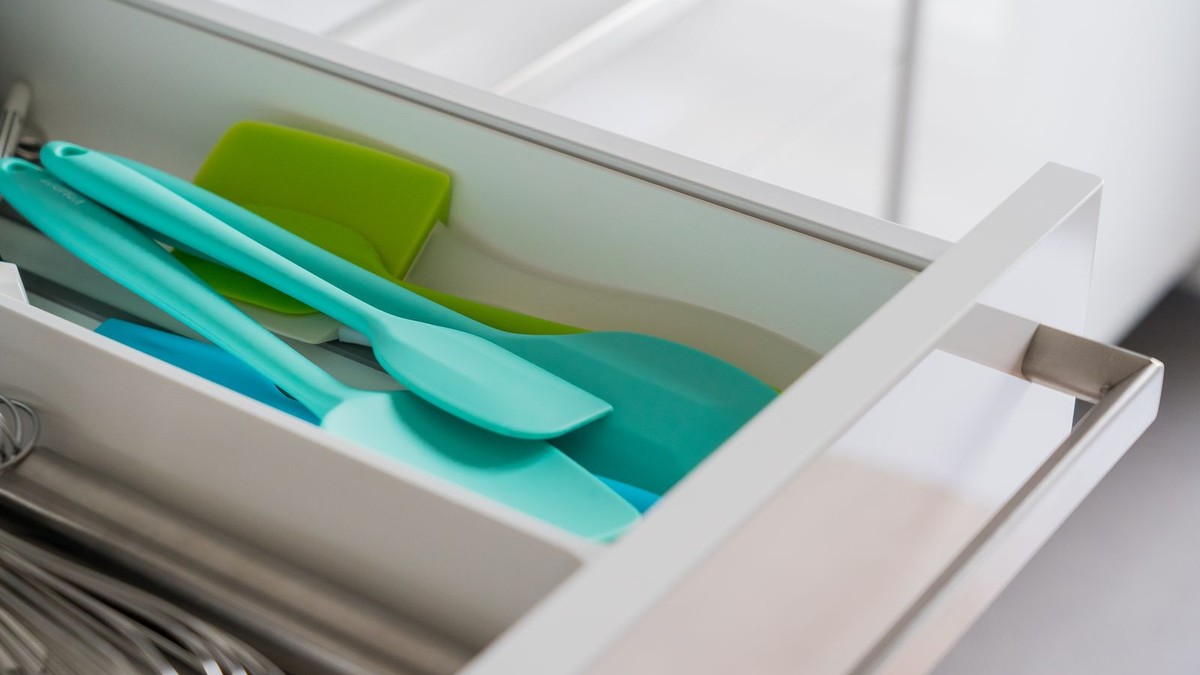
An expandable plastic tray with longer, deeper compartments made for the bulky cooking tools — spatulas, ladles, whisks, tongs — that never fit a silverware tray, and it adjusts to the drawer so nothing slides around. Dishwasher-friendly for the inevitable splatters. The pick for the second kitchen drawer, the one full of cooking utensils: it keeps the big tools from tangling into a knot and wasting the whole drawer.
Check price on Amazon →Clear Plastic Modular Drawer Organizer Trays (6-Pack)
A set of clear, mix-and-match trays in sizes you arrange to fit the drawer, so the junk or gadget drawer — the one full of odds and ends that change constantly — finally has a layout you can rework whenever the contents do. Clear walls let you see everything at a glance. The pick for the catch-all drawer: rearrange the bins as the stuff changes, and the drawer that used to swallow things keeps every small item visible and corralled.
Check price on Amazon →Utoplike In-Drawer Bamboo Knife Block
A bamboo knife block that lies flat inside a drawer, holding your knives securely on their sides so the bulky countertop knife block can go — reclaiming precious counter space in a small kitchen while protecting the blades' edges. It fits a drawer you can spare and keeps sharp knives out of a loose jumble. The pick for anyone whose counter is hostage to a knife block: move the knives into a drawer and get the single most valuable surface in the kitchen back.
Check price on Amazon →Utoplike Adjustable Bamboo Drawer Dividers (4-Pack)
Spring-loaded bamboo dividers that press against the drawer sides to split a deep or wide catch-all drawer into exactly the zones you want, with no tools and no fixed layout — so things stop sliding into one heap every time you open it. Move them whenever your needs change. The pick for the big, lawless drawer: carve it into sections for wraps and foil, bags, or small appliances, and it goes from dead space to organized in minutes.
Check price on Amazon →Wood Pegboard Drawer Organizer (Adjustable Pegs)
A pegboard base with movable pegs that hold plates, bowls, and lids upright inside a deep drawer, so a small kitchen short on cabinets can store dishes in a drawer instead — pegs reposition to grip whatever you're stacking so nothing shifts or chips. The pick when the cabinets are full and the dishes have nowhere to go: a deep drawer becomes safe, visible dish storage, and you pull plates from the drawer instead of reaching into a crowded upper cabinet.
Check price on Amazon →Start with the everyday silverware drawer and an expandable tray sized to it, then give each remaining drawer the organizer that fits what it holds — a utensil tray for cooking tools, modular bins for the junk drawer, dividers for the deep one. Move the knife block into a drawer to win back the counter, and use a pegboard drawer for dishes when the cabinets are full. Then take the system through the rest of the kitchen with our small kitchen cabinet organizers, free the counter completely with our guide to organizing a tiny kitchen with no counter space, sort out the bin situation with our small kitchen trash cans roundup, and see the whole plan in our small kitchen storage guide.
Common questions
How do I organize kitchen drawers in a small kitchen?
Give each drawer one job and the organizer that fits it, and measure before you buy. Put an expandable tray in the everyday silverware drawer, a deeper utensil tray in the cooking-tool drawer, small modular bins in the junk drawer, and adjustable dividers in any deep catch-all drawer. Move the counter knife block into a drawer to reclaim surface, and use a pegboard drawer for dishes if the cabinets are full. Expandable and modular organizers fit the space exactly and adapt as your kitchen changes.
What's the best drawer organizer material — bamboo or plastic?
Both work; choose by budget and look. Bamboo looks warmer and more upscale, resists moisture well, and feels sturdy, but costs a bit more and should be hand-washed. Plastic is cheaper, usually dishwasher-safe, and easy to wipe out after spills, though it looks more basic. For a visible everyday drawer, bamboo is worth it; for a junk or utility drawer, plastic is the practical pick. The more important factor is that the organizer is expandable or modular so it fits your drawer without a wasted gap.
How do I stop deep kitchen drawers from becoming a mess?
Divide them vertically and by zone. A deep drawer turns into a heap because everything slides into one pile, so add adjustable spring-loaded dividers to carve it into sections — wraps and foil here, bags there, small appliances in another — and each item stays put. For a deep drawer of dishes, a pegboard organizer holds plates and bowls upright so they don't shift. The rule is that nothing should be able to slide freely; once every zone is defined, a deep drawer holds far more, neatly.
Where should I store knives in a small kitchen?
In a drawer, with an in-drawer knife block, to free up the counter. A countertop knife block eats a chunk of your scarcest surface; an in-drawer block lays the knives flat and secure on their sides inside a drawer you can spare, protecting the edges and keeping sharp blades out of a loose jumble. It's safer than loose knives in a drawer and reclaims counter space you can actually use. If you'd rather go vertical, a magnetic wall strip is the other counter-free option.