Pots and pans are the worst-behaved things in a small kitchen. They nest badly, stack into a tower that collapses the moment you pull the one on the bottom, and come with lids that fit nowhere and slide everywhere. One deep cabinet ends up holding the whole chaotic pile, and getting the small saucepan out means unstacking three bigger ones and chasing a lid across the shelf. The fix isn't a bigger cabinet — it's changing how they're stored, from a horizontal stack to vertical slots, pull-out trays, and lids kept separately. Done right, every pot comes out in one motion and the lids have a home. Here's how the organizer styles compare and the specific ones worth buying.
For most small kitchens, a vertical pan rack is the best pot and pan organizer — it stands pans and lids on their edges in individual slots so you slide out the one you want without unstacking the pile, and it turns one tall dead cabinet into filed, one-grab storage. If your cabinet is deep, a pull-out organizer brings the back to you; pan protectors let you nest safely when you must stack; a cabinet-door rack finally homes the lids; a wall rack gets pans out of the cabinet entirely; and an expandable organizer fits an awkward space. Below, the best pick for each setup and the move that frees the most room.
How to choose a pot & pan organizer
The whole problem is that pans are stored flat and stacked, and the whole solution is to store them on edge or pull them out — so the choice comes down to which of those your cabinet can take, plus what to do with the lids.
Decide the direction: stand them up, pull them out, or hang them. A horizontal stack is the enemy, because reaching the bottom pan means lifting everything above it. The three cures each suit a different cabinet. Vertical racks stand pans and lids on their edges in dividers, so each slides out alone — perfect for a tall cabinet with wasted height, and the single highest-impact change for most kitchens. Pull-out organizers mount in a deep base cabinet and slide the whole pile forward like a drawer, best when the cabinet is deeper than it is tall and the back is unreachable. Wall or rail hanging gets pans out of the cabinet altogether and onto vertical space you weren't using — the move when the cabinets are simply full, and the same "put the walls to work" logic from our small kitchen storage guide. Measure the cabinet's interior height for a vertical rack and its depth for a pull-out before you buy; the dividers on most vertical racks also adjust, so check they'll space wide enough for your biggest stockpot.
Store the lids separately — they're the real space thief. Lids are what turn a manageable set of pans into chaos, because they don't stack and they slide. Always plan a separate home for them: a rack mounted inside the cabinet door keeps them off the shelf entirely and uses space that was doing nothing, while a freestanding lid rack or the lid slots on a vertical organizer stand them upright beside the pans. Getting the lids out of the pile is often what makes the pots suddenly fit.
When you must stack, nest smart — and be honest about how many pans you need. If a vertical rack won't fit and you have to stack, nest pans largest to smallest and slip a felt pan protector between each one so they don't scratch and so the stack stays stable and easy to lift apart. And before buying any organizer, pull everything out: most small kitchens hold one or two pans that never get used, and the easiest organizing win is owning fewer, better pans. A tidy set of five that all get used beats a crammed cabinet of twelve. The leftover cabinet space then goes to the rest of the system in our small kitchen cabinet organizers guide.
The organizers compared
| Pick | Type | Where it goes | Best for |
|---|---|---|---|
| INMAKER Vertical Rack | Upright divider rack | Tall cabinet | The all-rounder |
| Seinloes Pull-Out | Slide-out organizer | Deep base cabinet | Reaching the back |
| BOYAN Pan Protectors | Felt separator pads | Any stack | Stacking safely |
| ORDORA Lid Holder | Cabinet-door rack | Inside a door | Taming the lids |
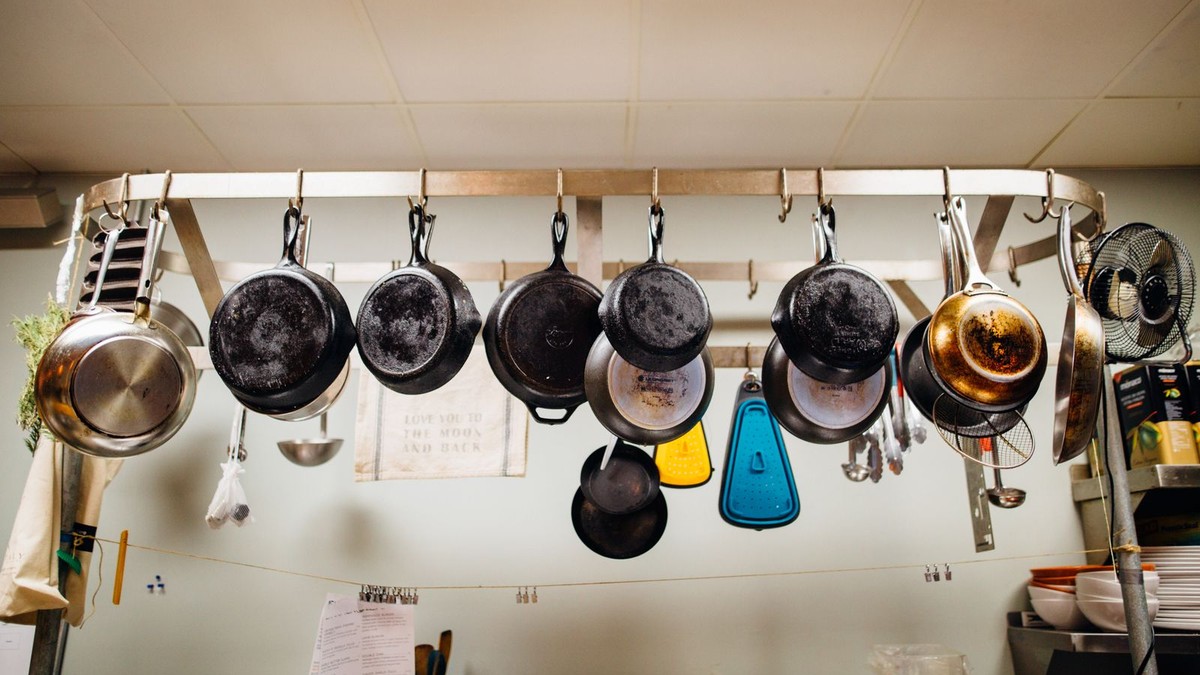
| Toplife Wall Rack | Wall-mounted rail | A bare wall | Cabinets are full |
| seasky Expandable | Adjustable rack | An awkward spot | A custom fit |
Cabinet heights, depths, and pan sizes vary — measure your interior height and depth, and check divider spacing fits your biggest pan.
Our product picks
INMAKER Pots and Pans Organizer, Under Cabinet (Expandable)
A vertical rack that stands pans and lids on their edges in adjustable dividers, so you slide out the exact pan you want instead of unstacking the whole pile — turning one tall, dead cabinet into filed, one-grab storage. The dividers adjust to fit everything from a crepe pan to a stockpot lid. The default fix for most small kitchens: it ends the collapsing-stack problem and uses the wasted vertical height in a single move.
Check price on Amazon →Seinloes Expandable Pull-Out Cabinet Organizer (21" Deep)
A slide-out organizer that mounts in a deep base cabinet and pulls the whole pile forward like a drawer, so the heavy stockpot at the back comes to you instead of requiring a full excavation. It expands to fit the cabinet width and raises items off the floor of the cabinet. The pick for a deep lower cabinet where the back half might as well not exist — one pull brings everything into reach without kneeling and digging.
Check price on Amazon →BOYAN Pot and Pan Protectors for Stacking (12 Pieces, 3 Sizes)
Felt separator pads in three sizes that sit between nested pans, so when you must stack you can do it without scratching the finish and without the stack seizing into one immovable lump. They keep nonstick coatings intact and let you lift the pile apart easily. The pick for when a vertical rack won't fit and stacking is the only option — the cheapest organizer here, and the one that saves your cookware while keeping the stack stable.
Check price on Amazon →ORDORA Pot Lid Organizer for Cabinet Door (2 Pack)
A pair of racks that mount inside the cabinet door and hold lids upright off the shelf entirely, finally giving the sliding, stacking lids a home and using the dead space on the back of the door. No drilling into the cabinet box — it fixes to the door. The pick for the single most annoying part of cookware storage: get the lids onto the door and the pots underneath suddenly have room to breathe.
Check price on Amazon →Toplife 31.5" Wall-Mounted Pot Rack
A wall-mounted rail with hooks (and a shelf for lids and utensils) that gets pans out of the cabinet entirely and onto a bare stretch of wall, freeing a whole cabinet for everything else. Hang the pans you reach for daily where you can grab them in one motion. The pick when the cabinets are simply full: putting the everyday pans on the wall is the fastest way to win back a cabinet in a small kitchen.
Check price on Amazon →seasky Expandable Pots, Pans and Lid Organizer (Cabinet & Counter)
An adjustable rack that expands and reconfigures to fit an awkward cabinet or a stretch of counter, holding pans in some slots and lids in others so a single unit handles both. The flexible layout suits the odd-sized spaces small kitchens are full of. The pick when a fixed rack won't fit your cabinet: you set the width and the slot spacing to the space and the cookware you actually own.
Check price on Amazon →Start by standing your pans up — a vertical rack ends the collapsing-stack problem and uses the wasted height, and it's the highest-impact change for most small kitchens. Add a pull-out for a deep cabinet, pan protectors when you must stack, and a door rack to finally home the lids; put the everyday pans on a wall rack if the cabinets are full. Then carry the system through the rest of the kitchen with our small kitchen cabinet organizers, sort the fridge with our fridge organizers for small kitchens, tackle the counters in our guide to organizing a tiny kitchen with no counter space, and see the whole plan in our small kitchen storage guide.
Common questions
What's the best way to store pots and pans in a small kitchen?
Stand them on their edges instead of stacking them. A vertical rack with dividers lets each pan and lid slide out on its own, so you never unstack a pile to reach the bottom pan, and it uses the wasted height in a tall cabinet. Store the lids separately — on a cabinet-door rack or in the rack's lid slots — because lids are the real space thief. For a deep cabinet, a pull-out organizer brings the back to the front; when the cabinets are full, hang the everyday pans on a wall rack.
How do I organize pot lids so they stop falling over?
Give them a dedicated home standing upright, away from the pots. The tidiest option in a small kitchen is a rack mounted inside the cabinet door, which holds lids on edge and uses space that was doing nothing. A freestanding lid rack or the lid slots on a vertical pan organizer also work. The key is simply to separate lids from pots — once the lids aren't sliding around in the pile, the pots take far less room and come out cleanly.
Is it better to hang pots and pans or store them in a cabinet?
It depends on whether your cabinets have room. If a cabinet can take a vertical rack or pull-out, storing pans there keeps them out of sight and dust-free. If the cabinets are full — common in a small kitchen — a wall-mounted rack frees an entire cabinet by moving the everyday pans onto bare wall, and it keeps the ones you use most within arm's reach of the stove. Many small kitchens do both: hang the daily pans and file the rest upright in a cabinet.
How can I make my pots and pans take up less space?
Three moves. First, store them vertically or in a pull-out so you're not wasting the height above a flat stack. Second, get the lids out of the pile and onto a door rack, since lids cause most of the sprawl. Third — and easiest — own fewer pans: most small kitchens keep one or two that never get used, and a tidy set of five that all earn their place beats a crammed cabinet of twelve. When you must stack, nest largest to smallest with felt protectors so the stack stays stable and scratch-free.