A small room doesn't actually get bigger. What changes is how big it reads, and your eye is surprisingly easy to fool. Every trick below works by doing one of three things: pulling your gaze up, clearing the floor so you can see more of it, or softening the hard edges that tell your brain "the wall is right there." Get those three working together and a 10-by-11 bedroom stops feeling like a shoebox. Most of it costs little or nothing, and I've flagged the renter-safe versions throughout.
The fastest way to make a small room look bigger: hang one large mirror across from a window, get your curtains up near the ceiling and wider than the frame, and clear the floor of anything you can mount on a wall instead. None of it adds real square footage, but those three changes shift how the room feels more than a coat of paint will.
Hang curtains high and wide
This is the change people notice the second they walk in, and almost everyone gets it wrong. The default is a rod mounted right on the window frame with panels the exact width of the glass, which draws a hard rectangle around a small window and stops the eye dead.
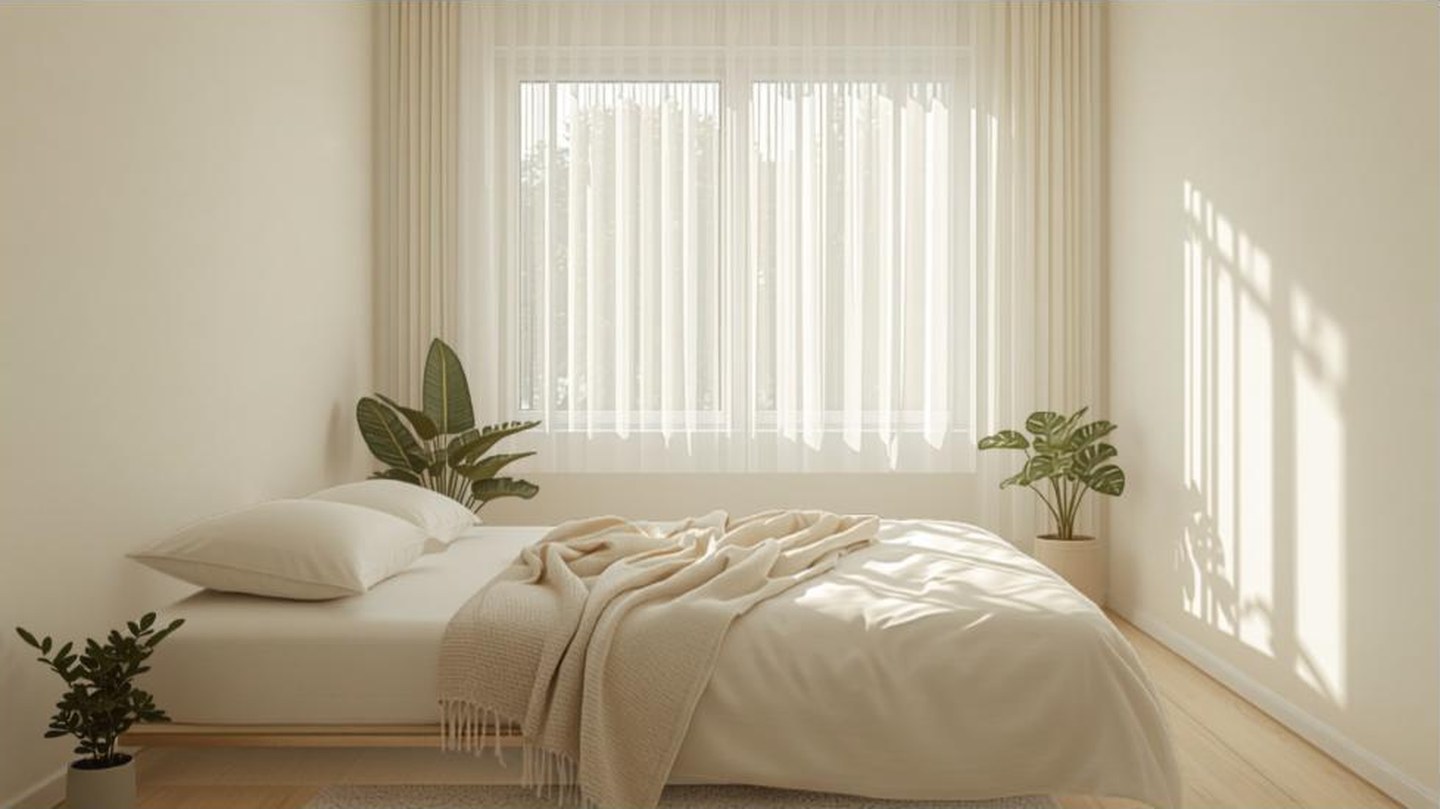
Do the opposite. Mount the rod 4 to 6 inches below the ceiling, or right at it, and run it 8 to 12 inches past the frame on each side. Now the panels hang floor to near-ceiling and the window reads taller and wider than it is. Get the length to just kiss the floor: a half-inch of clearance, not puddling, not floating. Stick to sheer or lightweight fabric close to your wall color, because heavy dark drapes swallow the light a small room is leaning on. Renters: a tension rod works inside a narrow recess, and no-drill adhesive brackets hold a lightweight rod fine (test the adhesive on a hidden patch first, it can lift paint coming off).
Put a mirror where it earns its keep
A mirror doesn't open a room by being shiny. It works by reflecting a light source or a view, which throws daylight into the dim side and gives your eye a second "window" to look through. Placement is the whole game: hang one large mirror opposite or beside your main window, and point it at something worth doubling, a window or a lamp, not a pile of laundry or the back of your TV. One big piece beats a gallery of little ones. Renting? Lean a full-length mirror against the wall instead of drilling, and anchor the top so it can't tip around kids and pets.
Send the eye upward
Anything vertical reads as height, because your eye follows the line up and counts the extra as space. Tall narrow bookcases, a vertically striped rug or throw, floor-to-ceiling curtains (above), all do it. The move that costs nothing: hang your shelves and art higher than feels natural. We default to eye level out of habit, which cuts the wall in half; lift the top of your shelving or your largest piece closer to the ceiling and the whole wall grows.
Clear the floor (this one's the big one)
If you only do one thing on this list, do this. Visible floor is the single strongest signal of "big." The more uninterrupted floor your eye can trace, the larger the room feels, which is why a cluttered small room feels claustrophobic even when it isn't.
Two rules. Get furniture up on legs: exposed legs let floor show underneath so a piece seems to float, while a skirted one flush to the ground looks like a solid block (glass or acrylic side tables nearly vanish). Then mount what you can: wall sconces instead of table lamps, a fold-down desk, floating shelves.
Then the rug, where small rooms get sabotaged constantly. Too small, and it chops the floor into pieces and crowds everything onto a postage stamp. Go big enough to sit under at least the front legs of your main furniture, with a border of bare floor around the edge: a 5x7 at the very minimum in a small living room, often an 8x10. One big rug unifies the floor into a single plane, and one plane reads as more space. (For furniture that earns its footprint, see our guide to space-saving furniture that actually works.)
Blur the edges with color
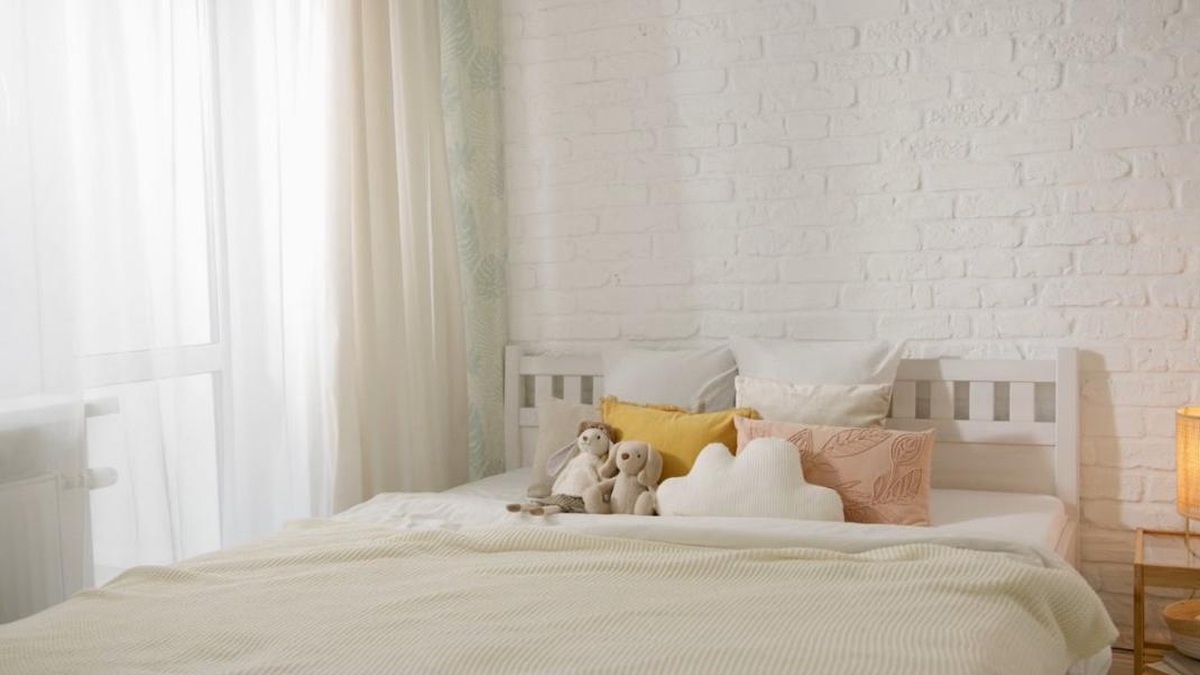
Your brain measures a room by finding its corners. Make the corners hard to find and the room loses its edges. That's the logic behind painting walls, trim, and ceiling the same soft shade, the technique designers call color-drenching: with no dark trim line boxing the room in, the surfaces melt together and the walls seem to recede. Reach for warm off-whites, pale greiges, soft sages, anything light and low-contrast, and keep the palette to two or three tones repeated. Can't paint? Get part of the effect with a matched palette across your bedding, curtains, and rug, and avoid dark furniture shoved against light walls.
Seven more that add up
Small wins, stacked:
- Float the furniture off the walls. Shoving everything to the perimeter draws a hard box. Pull pieces a few inches in and let a little air behind them.
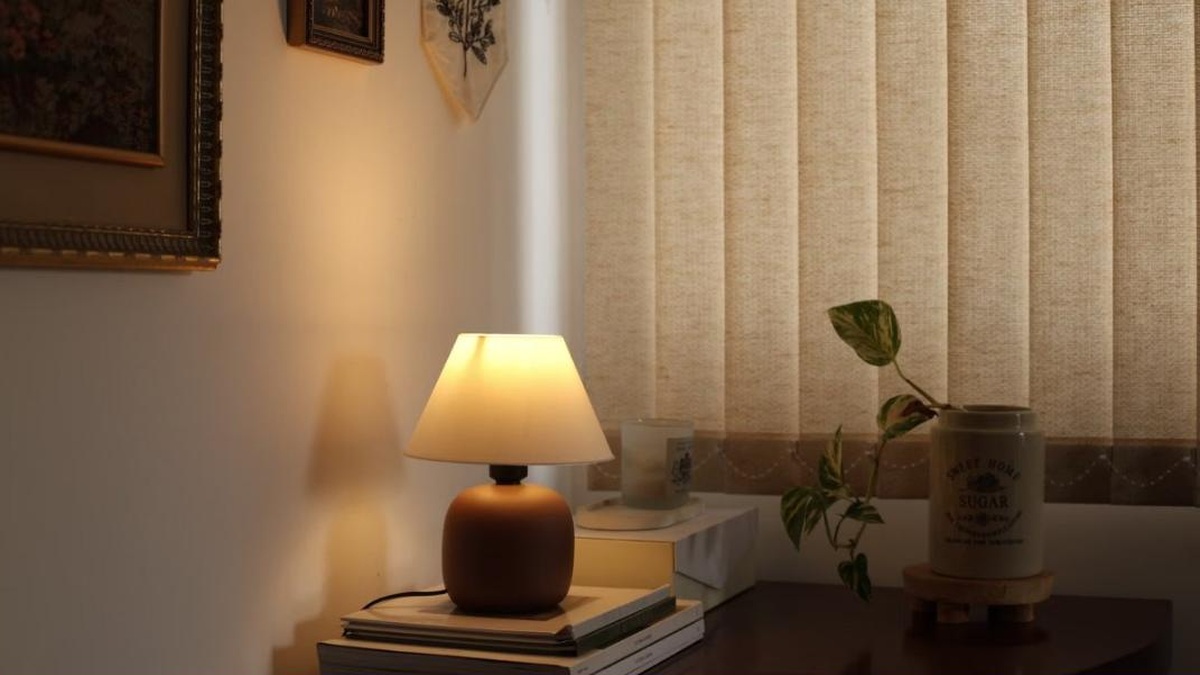
- Layer your lighting. One overhead bulb flattens a room into a cave after dark. Three warm sources at different heights (floor lamp, table lamp, sconce) give it depth.
- Choose closed storage. Baskets, lidded boxes, and cabinet doors give the eye somewhere to rest; open shelves crammed with stuff read as noise.
- Repeat one accent color three times around the room. It reads as "designed" without adding bulk.
- Cut the number of pieces, not just the size. One real coffee table looks calmer than three little stools scattered around.
- Keep surfaces mostly clear. Every object on a table is something the eye has to process.
- Use multi-tasking furniture so you own fewer pieces: a storage ottoman, a bed with drawers, nesting tables.
Mistakes that make a room feel smaller
The failures nobody warns you about, most of them the flip side of the tricks above: the too-small rug that undoes half your work, the heavy dark curtain that eats the light, furniture jammed flat against every wall, and the "it's small so I'll buy small" reflex that clutters the floor with tiny pieces. One more that's easy to miss: cool, harsh overhead light on its own throws hard shadows and makes the room feel like an office. If a room feels smaller than it should, one of these five is usually why.
Common questions
Can dark or bold colors ever make a small room look bigger?
Yes, if you commit. The enemy is contrast, not darkness. A room painted one deep shade top to bottom, walls, trim, and ceiling together, loses its edges just like a pale one does. What kills a small room is a light wall fighting dark trim, or a single accent wall planting a hard edge mid-room. Either way, keep the finish flatter; high-gloss bounces glare that flags every corner.
Does the size of the furniture matter more, or the amount?
The amount. Each object interrupts the floor and the sightlines no matter how petite it is, so a few correctly sized pieces beat a crowd of small ones. That's the reflex to fight when you're tempted to fill a small room with mini furniture.
What can I do if I can't drill or paint?
Lean a full-length mirror instead of hanging one, use tension rods or adhesive no-drill brackets for high-and-wide curtains, and choose freestanding pieces you can pull off the walls. For color, carry one light, low-contrast palette across your soft furnishings. Patch-test any adhesive on hidden paint first, since it can pull paint coming down.
What to buy first
Antok 71" Full-Length Leaning Floor Mirror
One of the best changes for the money: no drilling, moves with you, and it bounces daylight the moment you lean it across from a window. Strap the top to the wall so it can't tip.
Check price on Amazon →Extra-Long Adjustable Curtain Rod (30–144")
The "high and wide" trick in one purchase. Look for a rod that extends well past your window and floor-length sheer panels. No-drill bracket options exist for deposit-safe installs.
Check price on Amazon →Washable Neutral Area Rug (5x7)
Size up. A rug that tucks under your furniture unifies the floor and makes the whole room read larger, the opposite of the little rug most people buy.
Check price on Amazon →Start with the mirror and the curtains this weekend. They're cheap, reversible, and you'll feel the difference the moment you step back. Everything after that is fine-tuning.