Most small kitchens don't have a pantry. They have a cabinet — maybe two — where dry goods go in and then vanish into a back-of-shelf void until something expires. The problem is almost never that you own too much food. It's that a standard cabinet is one tall, deep box, and food doesn't stack into a box efficiently. Half the height sits empty above the cans; the back half sits dark and forgotten behind the front row. Fix the geometry and one cabinet holds what you thought needed a closet.
To organize a small pantry, solve two problems: wasted vertical air and the unreachable back of deep shelves. Add shelf risers and tiered stands to use the full height, put a lazy Susan or pull-out bin on the deep shelves so the back comes to you, and decant bagged goods into stackable clear containers so you can see and reach everything. That's most of it.
Stop wasting the vertical space
Look at a packed cabinet from the side and you'll see the waste: a row of cans with four inches of empty air above them, then the shelf. That air is storage you already paid for. Two cheap tools reclaim it.
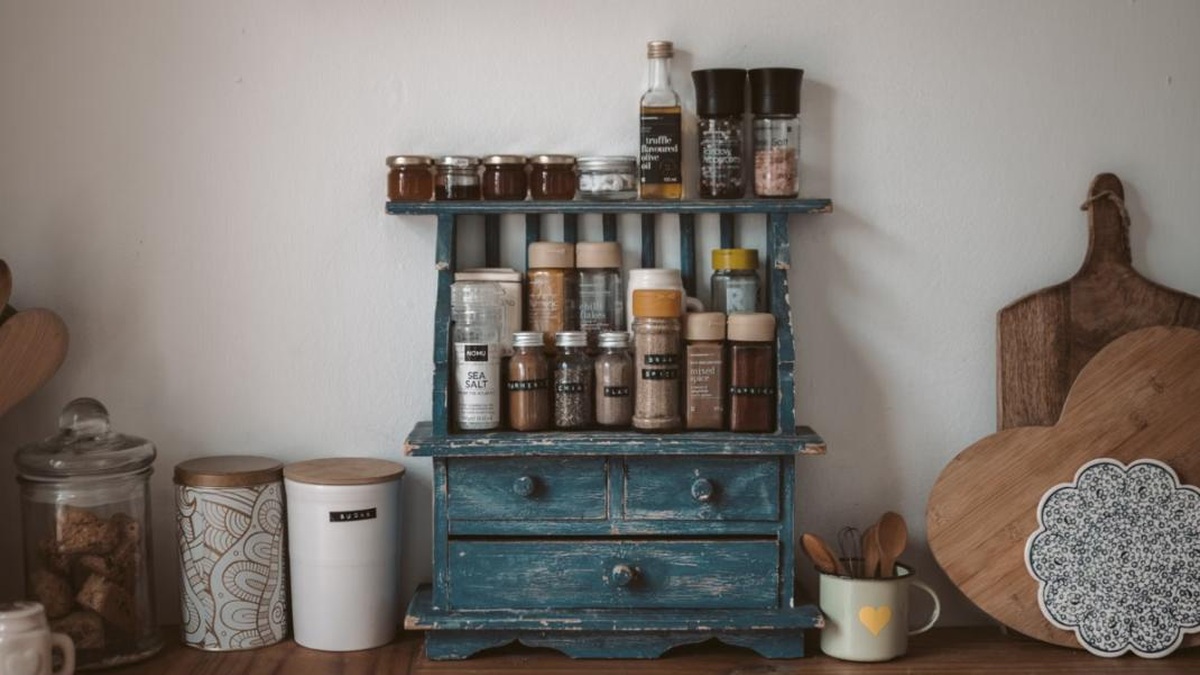
Shelf risers — little wire or plastic platforms — create a second level, so short jars go up top and the space underneath stays usable. Tiered can organizers stair-step your cans so you can read every label at once instead of excavating the back row. For spices, a tiered rack or a drawer insert turns a jumbled shelf into something you can actually scan.
The principle is simple: no item should have more than an inch or two of dead air above it. If it does, something should be sitting on top of it. This one shift — thinking in levels instead of a single floor — is what separates a cabinet that holds twice as much from one that doesn't. It's the same logic behind good cabinet organizers for small kitchens, applied to food.
Fix the deep-shelf black hole
Deep shelves are where good intentions go to die. You can reach the front twelve inches; everything behind it is a mystery you rediscover when it's a year past date. You don't need shallower shelves — you need the back to move to the front.
A lazy Susan is the classic answer: spin it and the back row rotates into reach. One turntable handles oils, vinegars, and sauces beautifully, and a two-tier one doubles the payload. For the shelves a turntable doesn't suit, pull-out bins or baskets work like drawers — grab the handle, the whole thing slides out, and you're looking at the back row without unloading the front. Group like with like in each bin (baking, snacks, pasta and grains) so one pull gets you everything for a task.
The test: you should never have to remove a front item to see or reach a back one. If you do, that shelf needs a turntable or a pull-out.
Decant (but only what's worth it)
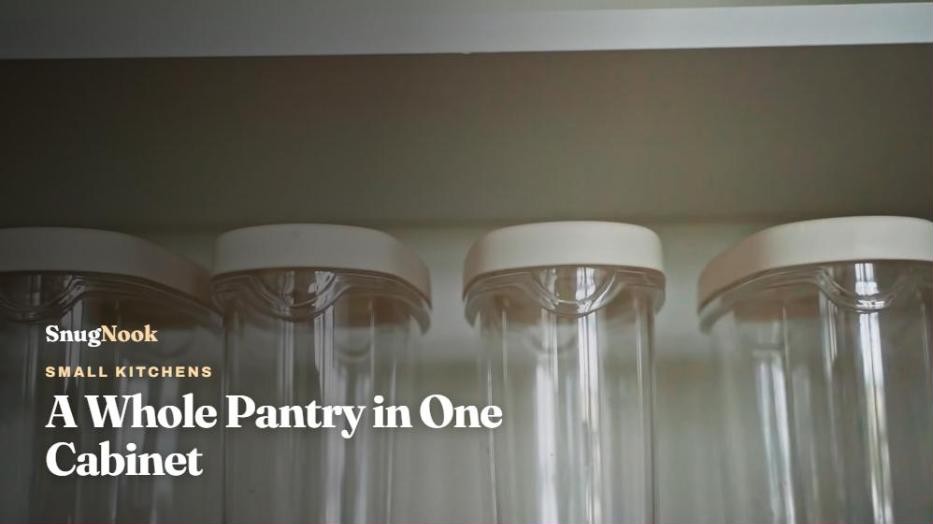
Pouring flour, rice, cereal, and pasta into matching clear containers isn't just for the photos — though it does make a cabinet look calmer. It genuinely saves space, because a rigid rectangular container stacks and squares off in a way a floppy half-empty bag never will, and it kills the dead space bags create. You also see exactly how much you have left, so you stop buying a third bag of rice.
But don't decant everything, and don't buy a matching set of forty. Decant the staples you buy in bags that don't stack: flour, sugar, rice, oats, pasta, cereal, coffee, snacks the kids raid. Leave things that already come in stackable rigid packaging alone. Airtight seals matter most for anything that goes stale or attracts pantry moths — flour, grains, nuts, brown sugar. Square or rectangular containers beat round ones in a cabinet every time, because round wastes the corners. Add a label (a strip of tape and a marker is fine) with the name and, if you're the type to forget, the cook time or a best-by date.
Steal the door and the wall
When the shelves are full, the cabinet door is still empty. An over-the-door rack — the wire kind that hangs on the inside of a cabinet or pantry door — adds a whole column of shallow storage that's perfect for spices, foil and wrap boxes, and small packets. Shallow is the point: you can see everything because nothing hides behind anything.
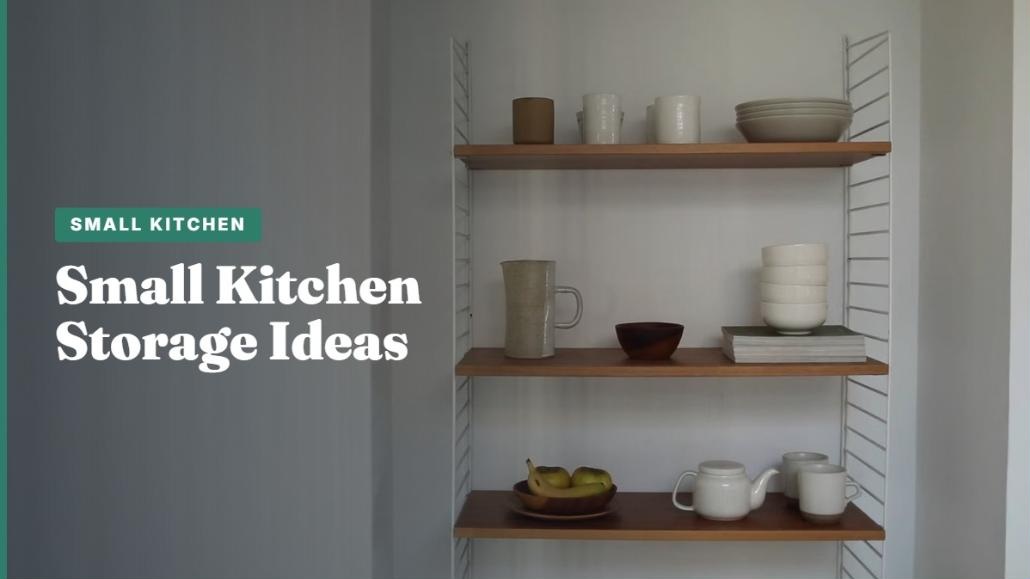
No door to spare? Go to the wall. A short length of wall shelf, a magnetic strip for spice tins, or a hanging basket rail turns bare wall next to the cabinet into overflow that keeps the counter clear. If your kitchen's real problem is counter space rather than cabinet space, a rolling cart is the bigger fix — we cover that in organizing a tiny kitchen with no counter space and in our guide to kitchen carts for small kitchens. The same over-door trick works on more than pantries, too; see over-the-door organizers for the full range.
Zone it so it stays organized
Organizing a pantry once is easy. Keeping it organized is the actual skill, and the trick is zones. Give every category a home — baking here, breakfast there, snacks in that bin, canned goods on that tier — so putting groceries away is automatic and nothing drifts. When each thing has a spot, the pantry can't slowly dissolve into chaos, because there's no ambiguous middle ground where a stray box lands.
Put what you use daily at eye level and easy reach. Push the rarely-touched stuff (the holiday-only tin, the backup of the backup) up high or in the very back. Keep a small "eat me first" spot at the front for things nearing their date so they don't get buried and wasted. Do a five-minute reset when you unload groceries — front-face the labels, pull anything expired — and the system holds for months instead of days.
Common questions
How do you organize a pantry with deep shelves?
Bring the back to the front instead of fighting the depth. Lazy Susans spin the back row into reach; pull-out bins slide out like drawers so you can see everything without unloading. Group each bin by category so one pull gets you all the baking or all the snacks. And keep the tallest, least-used items at the very back where reachability matters least.
What should I put my pantry staples in?
Rigid, airtight, square or rectangular containers — round ones waste the corners of a shelf. Decant the things that come in un-stackable bags (flour, rice, pasta, cereal, oats) and anything that goes stale or attracts pantry moths (grains, nuts, brown sugar). Leave items that already ship in sturdy stackable packaging as they are. Label each one so nobody's opening three containers to find the sugar.
How do you organize a small kitchen with no pantry?
Treat one cabinet as the pantry and maximize it with risers, tiered can stands, and a lazy Susan, then push overflow onto the back of the cabinet door and a short wall shelf. A rolling cart can serve as a movable pantry-plus-prep station. The whole approach is the same as any small kitchen: use the vertical space and the doors, not just the shelves.
How can I make my pantry look organized?
Three moves do most of the work: decant staples into matching clear containers, front-face all your labels so they read like a shelf in a store, and contain loose items in a few bins so there's no scattered clutter. Uniform containers and visible labels read as "organized" to the eye even when the volume of food hasn't changed at all.
Our product picks
SONGMICS Cabinet Organizer Shelf (Set of 4)
Four stackable racks add a second level to any shelf so short jars and cans stop wasting the air above them — the cheapest way to nearly double a cabinet's capacity. Adjustable width to fit odd cabinets.
Check price on Amazon →Simple Houseware 3-Tier Can Organizer (holds 36 cans)
Stair-steps up to 36 cans so every label is readable at a glance — no more excavating the back row or buying duplicates of what you already own. Stackable if you need more.
Check price on Amazon →Copco 2-Tier Non-Skid Turntable (12")
A long-running bestseller that spins the back row into reach. Two tiers of non-skid trays are ideal for oils, sauces, and jars on a deep shelf where the back would otherwise vanish for a year.
Check price on Amazon →Vtopmart Clear Pantry Organizer Bins (6-pack)
Handled clear bins that slide out like drawers so you reach the back without unloading the front. Six to a pack, so you can group by category — baking, snacks, grains.
Check price on Amazon →Vtopmart Airtight Food Storage Containers (24-piece)
Rigid, square, stackable, and sealed — the four things a floppy bag isn't. A 24-piece BPA-free set with labels and a marker; decant flour, rice, pasta, and cereal to save space and see what's left.
Check price on Amazon →Delamu Over-the-Door Pantry Organizer (6-Tier)
Six metal tiers hang on the inside of the cabinet or pantry door and add a full column of shallow storage for spices, wraps, and packets — all visible, nothing hidden. Hooks over the door or mounts to the wall.
Check price on Amazon →Start with the risers and a turntable before you buy anything else — they solve the two problems (wasted height, unreachable back) that make a small pantry feel full when it isn't. Decant and zone once you can actually see what you own.