Most small kitchens don't have a pantry — they have a cabinet or two where food goes in and vanishes into a back-of-shelf void until it expires. The good news is that the products that fix it are cheap, and the right handful turns that crowded cabinet into a pantry that holds more, wastes nothing, and lets you see everything at a glance. The trick is knowing which organizer solves which problem: risers for wasted vertical air, turntables and pull-out bins for unreachable deep shelves, clear containers for bagged staples, and a door rack for the overflow. Buy the ones that match your actual problems — not a matching set of forty — and you'll get most of the gain for very little money. Here are the best, and what each one is for.
For most small-kitchen pantries, start with shelf risers and a lazy Susan — they fix the two biggest problems, wasted height and the unreachable back of deep shelves. Add clear bins and airtight containers to tame bagged staples, and a door rack for spices and overflow. Below, the best pick in each category and the problem it solves.
How to choose pantry organizers
Don't buy a set — buy the fix for your specific problem. Look at your cabinet and diagnose it first.
Wasted vertical air? If there's four to six inches of empty space above the cans and jars, you need shelf risers or stacking shelves to add a second level. This is the most common problem and the cheapest fix.
A deep, unreachable back? If you can't see or reach the back of a shelf without unloading the front, you need a lazy Susan (spin the back into reach) or pull-out bins (slide the whole thing out like a drawer). Turntables suit oils, sauces, and jars; pull-outs suit grouped staples.
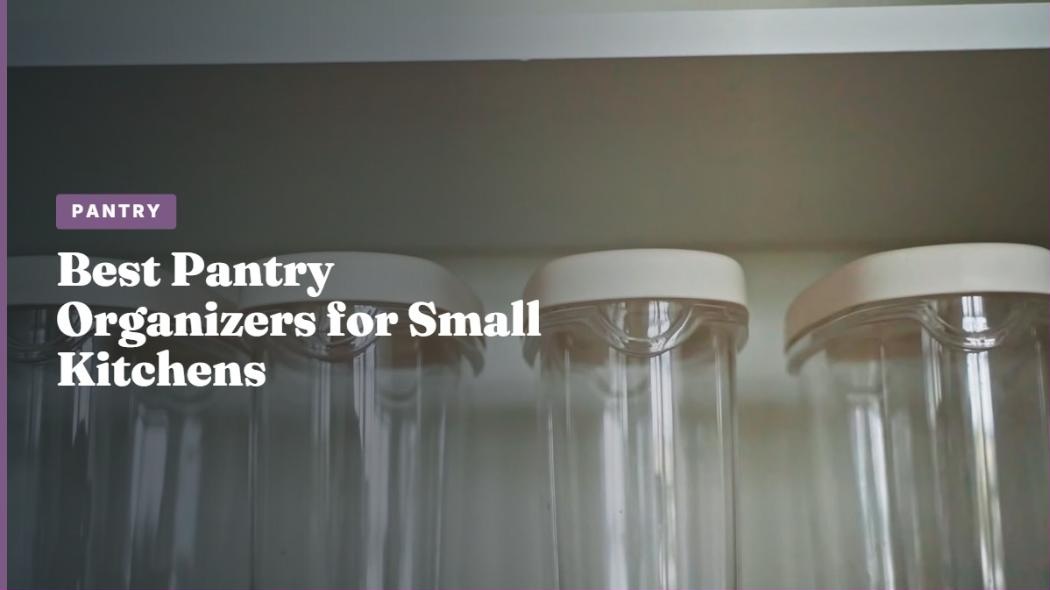
Bagged staples everywhere? Flour, rice, pasta, and cereal in floppy bags waste space and go stale. Clear airtight containers square them off, stack them, and let you see how much is left. Decant the staples that come in un-stackable bags; leave sturdy packaging alone.
Overflow with nowhere to go? When the shelves are full, the inside of the door is a whole column of unused storage — a door rack holds spices, wraps, and packets where nothing hides behind anything.
The full how-to — decanting, zoning, front-facing labels — is in our small pantry organization guide, and this roundup is the shopping list that goes with it. For the wider kitchen, see small kitchen storage ideas and cabinet organizers.
The organizers compared
| Organizer | Fixes | Best for |
|---|---|---|
| Shelf risers | Wasted vertical air | Cans, short jars, mugs |
| Lazy Susan | Unreachable deep shelves | Oils, sauces, jars |
| Clear pull-out bins | Deep shelves + grouping | Snacks, baking, grains |
| Airtight containers | Bagged staples | Flour, rice, pasta, cereal |
| Over-the-door rack | Overflow / no shelf space | Spices, wraps, packets |
| Spice drawer organizer | Jumbled spice jars | Reading every spice at a glance |
You rarely need all six — pick the two or three that match your cabinet's actual problems and add the rest only if you still have a mess.
Our product picks
SONGMICS Cabinet Shelf Risers (Set of 4)
Four stackable racks add a second level to any pantry shelf so short jars and cans stop wasting the air above them — the cheapest way to nearly double a shelf's capacity. Adjustable width to fit odd cabinets.
Check price on Amazon →Copco 2-Tier Non-Skid Turntable (12")
A long-running bestseller that spins the back row into reach. Two tiers of non-skid trays are ideal for oils, sauces, and jars on a deep shelf where the back would otherwise vanish for a year.
Check price on Amazon →Vtopmart Clear Pantry Organizer Bins (6-Pack)
Handled clear bins that slide out like drawers so you reach the back without unloading the front. Six to a pack, so you can group by category — baking, snacks, grains — and grab a whole task at once.
Check price on Amazon →Vtopmart Airtight Food Storage Containers (24-Piece)
Rigid, square, stackable, and sealed — the four things a floppy bag isn't. A 24-piece BPA-free set with labels and a marker; decant flour, rice, pasta, and cereal to save space and see what's left.
Check price on Amazon →Delamu Over-the-Door Pantry Organizer (6-Tier)
Six metal tiers hang on the inside of the cabinet or pantry door and add a full column of shallow storage for spices, wraps, and packets — all visible, nothing hidden. Hooks over the door or mounts to the wall.
Check price on Amazon →SpaceAid Bamboo Spice Drawer Organizer
A tiered bamboo insert that stair-steps spice jars in a drawer so you can read every label at once instead of digging. Comes with labels; needs about 3 inches of drawer depth. The upgrade that makes cooking faster.
Check price on Amazon →Buy the risers and a turntable first — they solve the two problems (wasted height, unreachable back) that make a small pantry feel full when it isn't. Add bins, containers, and a door rack once you can actually see what you own. Then zone it and front-face the labels using our pantry organization guide, and it'll hold for months instead of days.
Common questions
What are the best organizers for a small pantry?
Start with shelf risers (for wasted vertical air) and a lazy Susan (for the unreachable back of deep shelves) — those two fix the biggest problems for the least money. Add clear airtight containers to square off bagged staples like flour and rice, clear pull-out bins to group snacks and baking, and an over-the-door rack for spices and overflow. Buy the two or three that match your cabinet, not a giant matching set.
Should I decant everything into containers?
No. Decant only the staples that come in floppy, un-stackable bags — flour, sugar, rice, oats, pasta, cereal, and anything that goes stale or attracts pantry moths. Leave items that already ship in sturdy stackable packaging alone. Rigid square containers beat round ones because they don't waste the corners of a shelf, and airtight seals matter most for grains, nuts, and brown sugar.
How do I organize a deep pantry shelf?
Bring the back to the front instead of fighting the depth. A lazy Susan spins the back row into reach for oils and jars; pull-out bins slide out like drawers so you see everything without unloading. Group each bin by category so one pull gets you all the baking or all the snacks, and keep the tallest, least-used items at the very back where reachability matters least.