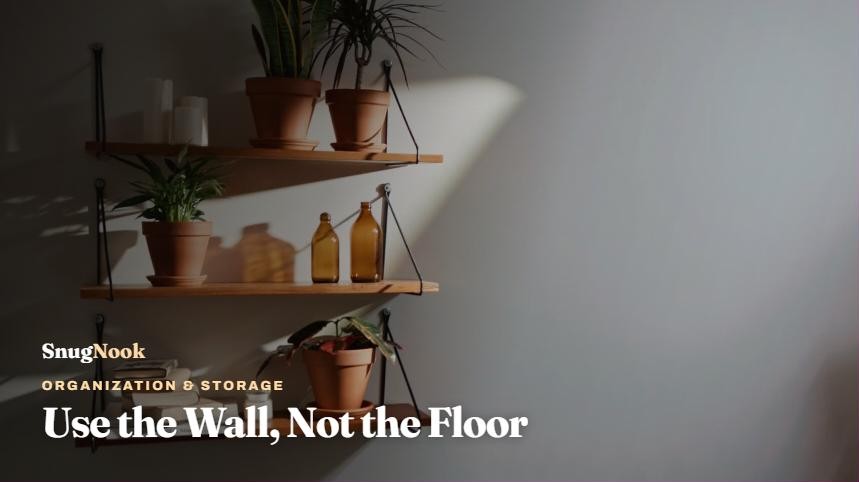
Small apartments almost never run out of space. They run out of floor. Look up from the clutter and you'll usually see two or three feet of bare wall above every surface, doing nothing — and that's the room you haven't used yet. Storage that climbs the walls instead of spreading across the floor is the single biggest shift you can make in a tight place, because it adds capacity without stealing the room you actually stand and walk in. Better still, most of it goes up without a single hole if you're renting. Here's how to work your way up.
The core move is simple: when you can't build out, build up. Mount shelves and rails on empty wall above furniture, hang organizers on the backs of doors, stack storage toward the ceiling, and reach for tension rods and adhesive hooks so none of it costs your deposit. A small apartment has far more vertical space than floor space — vertical storage is just claiming it.
Turn bare walls into shelving
The wall above a desk, sofa, toilet, or nightstand is prime storage hiding in plain sight. A couple of floating shelves there hold books, plants, mugs, or bathroom supplies and free up the surface below. The rule that keeps it from looking cluttered: hang in a tight cluster or a clean vertical stack rather than scattering single shelves around the room.
Go higher than feels natural. A shelf 12 to 16 inches below the ceiling creates a "high shelf" band that runs the whole perimeter — perfect for the things you reach for rarely (seasonal stuff, archives, the nice bowls you use twice a year). It draws the eye up, which also makes the ceiling read as taller. For the mechanics of picking and hanging them, our guide to floating shelves for small apartments covers weight ratings and stud-vs-anchor, and don't sleep on the corner shelves that use the most-wasted spot in any room.
A pegboard or a wall-mounted rail system takes it further in a workspace or kitchen: hooks, cups, and small baskets rearrange in seconds, so the wall flexes as your needs change. One square foot of pegboard can hold what a whole drawer does, and you can see all of it at once.
Use the back of every door
Every door in the apartment has a full wall of storage on its back that you're currently using to... close the door. An over-the-door organizer hangs from hooks that slip over the top — no install, nothing to patch — and turns that dead panel into a column of shelves or pockets.
Match the organizer to the door. A clear-pocket unit on a closet door swallows shoes, or better, toiletries, cleaning supplies, snacks, and craft bits. A wire rack on a pantry or cabinet door holds spices and wraps where you can see them. A few hooks on the entry door catch coats, bags, and the umbrella. The whole category is one of the highest-return things you can buy for a small place; we break down which style holds what in the over-the-door organizers guide.
Stack toward the ceiling
Floor storage isn't the enemy — short floor storage is, because it stops a foot up and wastes everything above it. Swap wide, low pieces for tall, narrow ones and you store more on a smaller footprint. A slim five-shelf bookcase, a tall narrow cabinet, or a bathroom over-the-toilet étagère all turn a sliver of floor into a column of storage.
Inside closets and cabinets, apply the same thinking to the air you're wasting. A hanging cloth shelf on the closet rod, shelf risers that add a second tier, and stackable bins that climb toward the shelf above all reclaim vertical inches you already paid for. A closet is usually half empty in the middle — dead air between the hanging clothes and the shelf. Our closet organizer guide is entirely about filling that gap without installing anything.
One caution on going tall: anchor freestanding shelving to the wall with an anti-tip strap, especially anything above waist height or in a home with kids or pets. It's a two-minute job and it's the difference between "tall storage" and "hazard."
Vertical tricks for a tiny kitchen
Kitchens punish you for having no counter, but they're full of untapped vertical space. Inside a cabinet, shelf risers double the usable height so short items stop wasting the air above them. A magnetic strip on the wall or side of a cabinet holds knives or spice tins off the counter entirely. A hanging rail with S-hooks under a shelf or along a backsplash gets utensils, mugs, and pot lids up and reachable.
The side of the fridge and the end of a cabinet run are two more vertical surfaces most people forget — a magnetic or adhesive rack there stores wraps, lids, or spices. If your real problem is counter space, a tall rolling cart adds a movable vertical stack of storage and prep surface; we cover both in organizing a tiny kitchen with no counter space and the cabinet organizers guide.
Renter-safe, no-drill options
Vertical storage sounds like a lot of drilling, but most of it isn't. If you rent, lean on the no-hole toolkit: adhesive hooks and strips rated for the weight you're hanging, tension rods (a spring-loaded rod between two walls of a nook or under a shelf makes an instant hanging bar), over-the-door hardware, and freestanding tall units that lean on the wall rather than attach to it.
A tension rod under the sink adds a hanging row for spray bottles; two tension rods in a cabinet create dividers for cutting boards and trays stood on end. Adhesive-mounted floating shelves now hold a real amount of weight if you follow the rating and press them properly. Between those and leaning ladder shelves, you can go fully vertical without touching a drill. For the complete damage-free playbook, see our renter-friendly wall decor and storage guide.
Common questions
How do you store things vertically in a small apartment?
Move storage off the floor and onto the walls, doors, and tall furniture. Mount floating shelves or a pegboard on empty wall above your furniture, hang over-the-door organizers on the backs of doors, choose tall narrow bookcases and cabinets over short wide ones, and add shelf risers and hanging organizers inside closets and cabinets. The goal is to use the two or three feet of bare wall above every surface that's currently doing nothing.
How high should you hang shelves in a small room?
Higher than you'd instinctively go. For a working shelf above a desk or sofa, keep it within easy reach (around 12 to 20 inches above the surface). For a storage-only "high shelf," run it 12 to 16 inches below the ceiling so it holds rarely-used items and draws the eye upward, which makes the ceiling feel taller. Just keep heavy items on lower, well-anchored shelves.
How can renters add storage without drilling holes?
Use tension rods, adhesive hooks and strips (matched to the weight), over-the-door organizers, and freestanding or leaning shelves that don't attach to the wall. Modern adhesive-mounted floating shelves hold a genuine amount if you follow the weight rating. These let you build a full vertical storage system that comes off clean at move-out with no patching and no lost deposit.
Our product picks
BAYKA Floating Wall Shelves (Set of 3)
The workhorse of vertical storage. Mount a tight cluster above a desk, sofa, or toilet to lift books, plants, and supplies off the surface below. Check the weight rating before you load them.
Check price on Amazon →Metal Pegboard Kit (4 Panels, 50 Hooks)
Hooks, cups, and baskets that rearrange in seconds. One square foot holds what a drawer does and you see all of it — ideal above a desk or in a kitchen.
Check price on Amazon →Simple Houseware Over-the-Door Organizer (24 Clear Pockets)
Turns the dead back of any door into a column of shelves or clear pockets. Zero tools, nothing to patch. One of the highest-return buys for a small place.
Check price on Amazon →MAHANCRIS 5-Tier Narrow Bookshelf
Stores a column of books and bins on a sliver of floor. Swap a wide, low unit for this and you gain capacity while giving back walking room. Strap it to the wall.
Check price on Amazon →Simple Trending Over-the-Toilet Storage Rack (3-Tier)
Claims the wasted vertical space above the toilet — the single most-ignored wall in a small bathroom — for towels, baskets, and supplies.
Check price on Amazon →ENJOYBASICS Adjustable Tension Rods (2-Pack, 32-66")
Spring-loaded bars that wedge between two surfaces for an instant hanging bar or divider — under sinks, in cabinets, across nooks. The renter's secret weapon for going vertical.
Check price on Amazon →Start with one bare wall and one door — the two easiest wins — and you'll feel the floor open up almost immediately. A small apartment isn't short on space; it's just been storing everything at knee height. Send it up the walls.