Blank rental walls are the fastest way to make a place feel temporary. But the lease says no nails, and you'd like your deposit back. Good news: damage-free wall decor has gotten genuinely good. Adhesive strips hold real weight now, peel-and-stick materials look far better than they used to, and there are hook and rail systems that leave nothing behind. Art, a gallery wall, shelves, even a "papered" feature wall, all of it reversible.
To decorate rental walls without nails, use damage-free adhesives and freestanding pieces: adhesive picture-hanging strips for framed art, adhesive hooks for lighter pieces and lights, peel-and-stick wallpaper or removable decals for a feature wall, and tension rods or freestanding shelves where you'd otherwise drill. Match each product to the weight it holds and it comes down clean at move-out.
Hang art with adhesive strips
The workhorse of renter wall decor is the adhesive picture-hanging strip: interlocking Velcro-style strips that hold a frame flat and peel off with a slow downward pull. They're rated by weight, so the one real trick is being honest about how heavy your frame is. Weigh it, then buy enough strips for the next tier up, because nearly every failure comes from underrating the load. Done right, they hold framed art and even small mirrors for years.
Adhesive hooks for the lighter stuff
For anything you'd rather hang than stick flat, adhesive hooks are the answer: string lights, a wreath, a hanging planter, an unframed canvas, or keys and hats by the door. They've grown well past the basic plastic hook into styles that actually look intentional. Use them to run entryway organization up a wall or to string café lights around a window. For a heavier or wider item, cluster several rather than trusting one hook past its limit.
Peel-and-stick wallpaper & decals
Few things transform a rental like a feature wall, and peel-and-stick wallpaper makes it reversible. It applies like a giant sticker, repositions while you work, and on smooth, well-cured paint peels off at move-out without a trace. Use it on one accent wall, inside a bookshelf's back panel, or on the flat face of a cheap dresser. If a whole wall feels like a big commitment, removable decals give you a lighter touch: a cluster of shapes, a headboard outline, an arch behind a console. One caveat specific to this material: textured walls are hit-or-miss, since the paper can't grip an uneven surface.
Shelves & storage without drilling
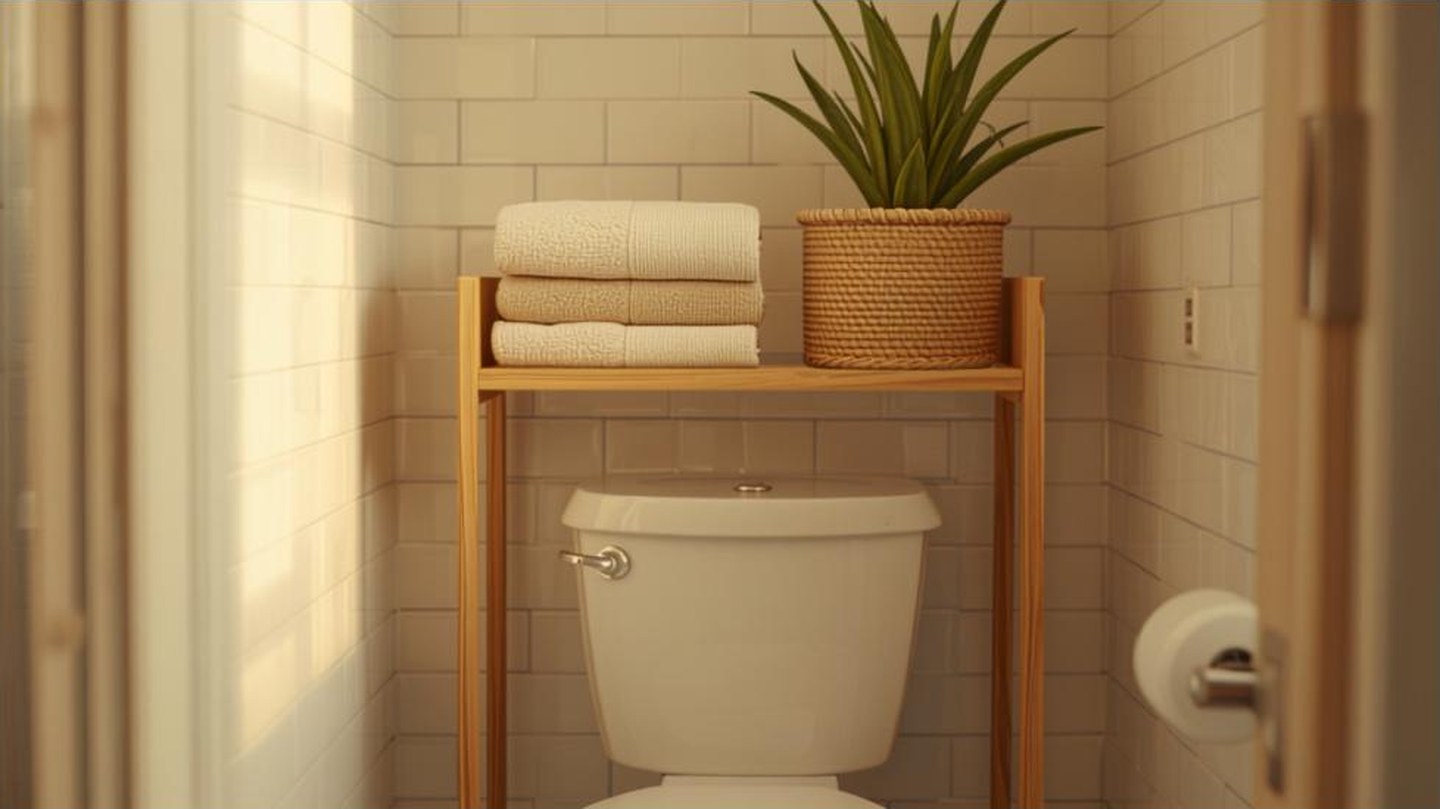
You can add real storage and display without a single hole. Tension rods wedge between two walls or inside a nook for a hanging rail or mini shelf, the same trick from our renter-friendly upgrades playbook. Adhesive floating shelves hold lightweight display items (a few books, a plant, framed photos) on the same weight-rated backing as picture strips. For anything heavier, lean a freestanding ladder shelf or slim bookcase against the wall and skip the wall entirely. Send the heavy books to the freestanding piece.
Build a no-nail gallery wall
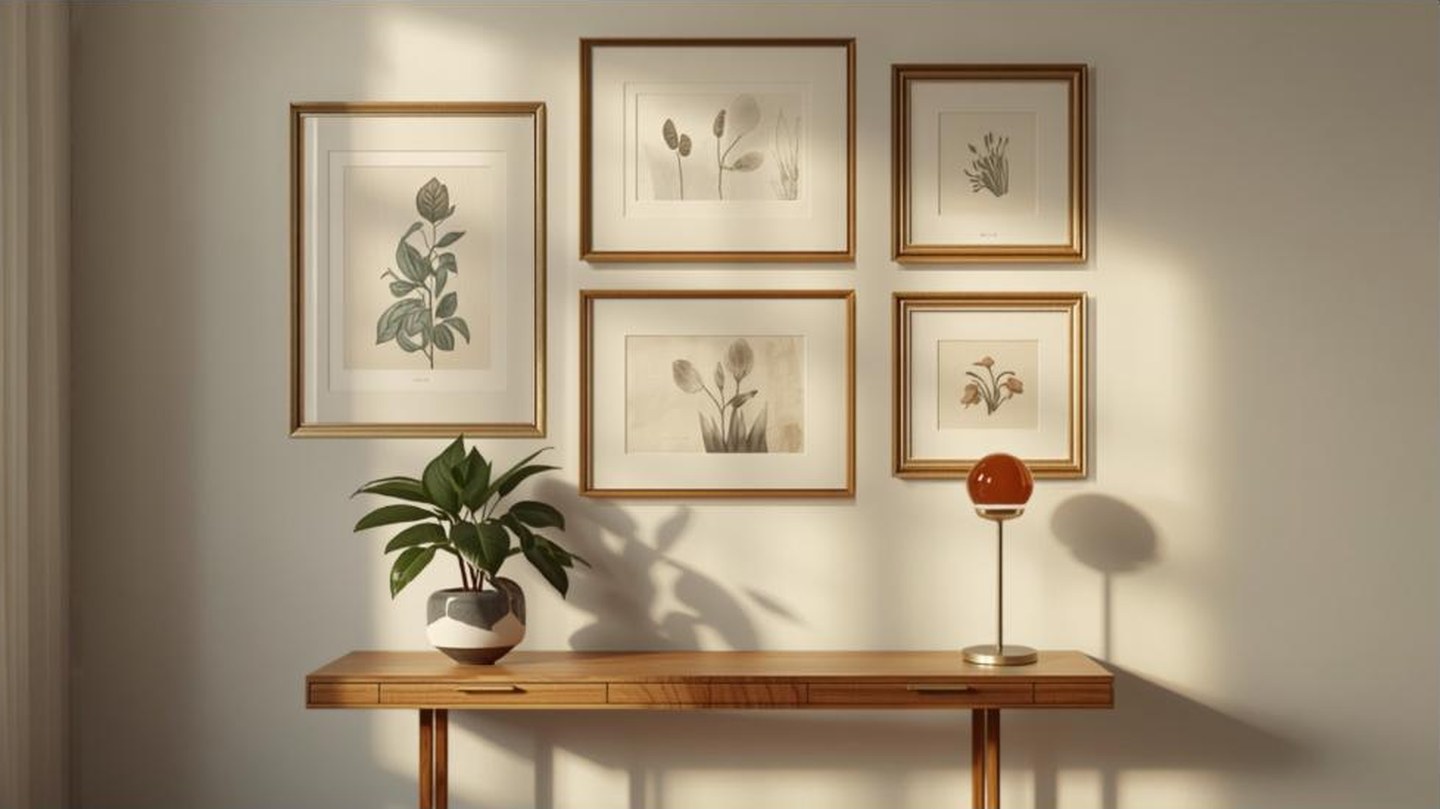
A gallery wall is one of the highest-impact renter moves, and it runs entirely on strips. Plan it on the floor first: lay the frames out and shuffle them until the spacing feels right, keeping a consistent two-to-three-inch gap. Snap a photo to copy, then transfer to the wall, checking each frame with a small level as you go. Mix frame sizes around one or two larger anchor pieces so it doesn't read as a grid of stamps. Because it's all strip-mounted, you can add to it over time and take the whole thing down in an afternoon.
Common renter-decor mistakes
Two details decide whether all of the above comes off clean. First, surface and timing. Adhesives fail on dusty, glossy, or textured walls, so wipe the spot down first, and let fresh paint cure a full two weeks before you trust it (this is the trap that catches new tenants in a just-repainted unit). Second, removal. Never pull straight out, which tears paint. Stretch strips slowly straight down, and warm a stubborn adhesive with a hair dryer for 20 seconds to soften the glue before it lets go.
Common questions
How much weight can adhesive strips actually hold?
More than most people expect, but only if you stack them. Strips are sold in tiers, and the ratings add up, so four medium strips carry roughly four times one. Heavier frames and small mirrors just need more strips spread across the back edges, not a stronger single product. When in doubt, go one tier heavier than your frame's actual weight.
Will any of this work on textured, brick, or concrete walls?
Adhesives are unreliable on anything not smooth and painted, so textured drywall, exposed brick, and concrete are the weak spots. Freestanding pieces (a leaning ladder shelf, a bookcase) and tension rods are your best bet there, since they don't rely on the wall surface at all. On light texture, a specialty brick-and-rough-surface adhesive hook can work, but test one before you hang anything you care about.
Our product picks
Command Picture-Hanging Strips
Interlocking strips hold frames flat and peel off clean with a downward pull. Buy by weight rating and size up. The whole gallery wall runs on these. No holes, no putty, no deposit drama.
Check price on Amazon →Command Damage-Free Wall Hooks
Weight-rated hooks for string lights, wreaths, hanging planters, and unframed art, plus hats and keys by the door. Peel off without a mark. Cluster several for heavier items.
Check price on Amazon →Peel-and-Stick Removable Wallpaper
Applies like a giant sticker, repositions as you work, and removes clean from smooth cured walls. Use it on one accent wall or a bookshelf back panel to change a room reversibly.
Check price on Amazon →Fill the walls, just do it reversibly. For more damage-free ways to make a rental your own, see our renter-friendly upgrades guide.