Most small apartments don't have an entryway. They have a door that opens straight into the living room and a growing pile of shoes, keys, and mail on the nearest surface. That drop zone is the first and last thing you see each day, so when it's chaos, the whole place feels a little more like it. The fix fits on as little as a two-foot strip of wall, using pieces that hang, lean, or stand. Most need no holes, and I've flagged the ones that do.
The short version: cover four jobs in as little width as possible, a shelf or tray for keys and mail, a slim rack or bench for shoes, hooks or a rail for coats and bags, and a mirror to bounce light and check yourself on the way out. Start with shoes and keys, since they create most of the daily pile.
Define the zone first
Before you buy anything, pick the patch of wall or floor that will be the entryway, even if it's just two feet beside the door. The pile forms precisely because nothing has a designated spot; give the drop zone a home and it gets far easier to keep in check. A small rug or mat does double duty here, marking the zone and catching the grit that would otherwise track across your floor. Everything below layers function into that footprint.
Keys, mail & the daily drop
The number-one source of clutter is the daily handful: keys, wallet, phone, mail, sunglasses, with nowhere to land. Give them one dedicated surface at hand height. A slim floating shelf with a lip, or a wall organizer with a tray and hooks, becomes their exact address so they stop migrating to the kitchen counter. It's one of the cheapest, highest-impact pieces in the whole entry. Most mount with a couple of screws, though adhesive versions exist if you can't drill.
Corral the shoes
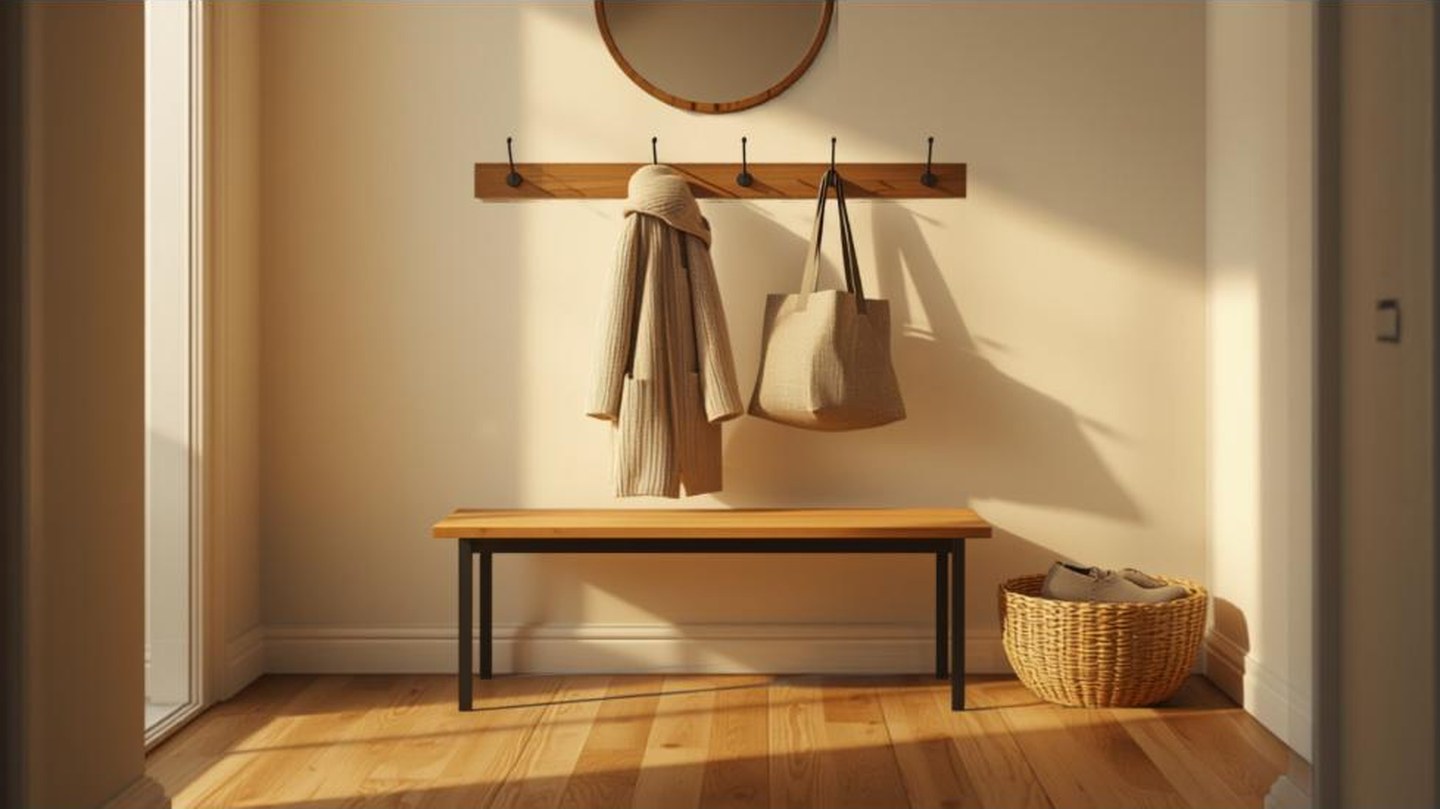
Shoes are the bulkiest, messiest part of an entry and the fastest to sprawl. Contain them with a slim vertical shoe rack, a storage bench you sit on to pull them off (pairs stashed inside), or a low cabinet that hides them behind a door. The bench is the multitasker, seat plus storage plus a surface on top, worth its slightly larger footprint if you have the room. Whatever you pick, keep it shallow, around ten to twelve inches deep, so it hugs the wall instead of jutting into the walkway. And keep only this season's shoes here; the rest store elsewhere.
Coats & bags go vertical
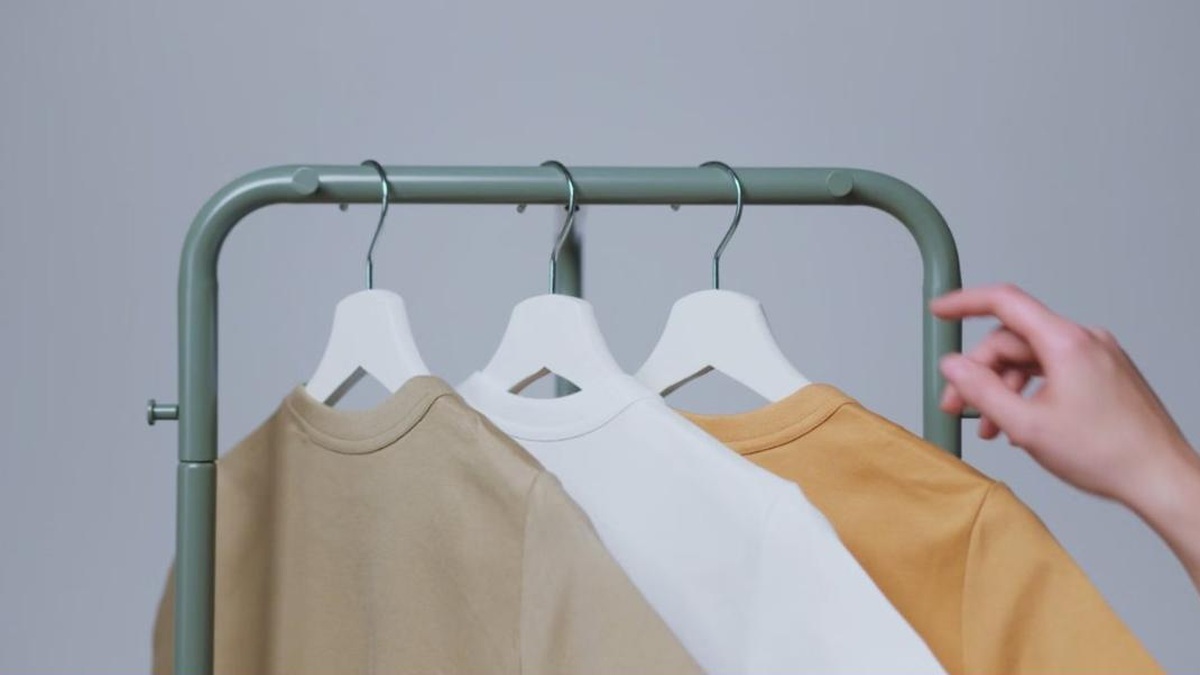
When the floor is spoken for, go up the wall. A row of adhesive or over-the-door hooks, or a mounted rail, turns bare wall into a home for coats, bags, hats, leashes, and umbrellas, the stuff that otherwise drapes over a chair. Set them high enough to clear the shoes below, so one strip of wall works top and bottom. In a rental, damage-free adhesive hooks rated for a few pounds each handle a coat or a bag and peel off clean; just respect the weight rating, because a heavy winter coat will pull a light-duty hook straight off the wall.
Add a mirror
A mirror by the door earns its keep twice: it's your last look before you leave, and it bounces light so a cramped, dim entry feels less boxed-in. It won't add real space, but it lifts a dark corner. A leaning full-length mirror needs no mounting and reads as intentional; a wall-mounted one saves floor where the entry is truly narrow. Strap a leaning one to the wall so it can't tip.
If you have no entryway at all
When the door opens straight into a room, one piece can conjure an entry where there's no architecture for one. A narrow console table or a slim shoe cabinet against the wall beside the door reads instantly as a drop zone: surface on top, storage below. The point is that a single intentional piece tells your brain this is where things go, so keys, mail, and shoes land there instead of on the couch. Add the hooks and mirror above it and that two-foot strip is a full entryway.
Common questions
Can I build an entryway without drilling a single hole?
Yes. Lean the mirror instead of mounting it, use a freestanding console or shoe rack that just stands against the wall, and hang coats on adhesive or over-the-door hooks. Choose adhesive pieces rated as damage-free and pull the tab slowly and straight down to remove them, and you'll leave nothing behind but a clean wall.
Where do wet or snowy shoes and dripping umbrellas go?
Set a waterproof boot tray or a rubber mat under the shoe rack so meltwater and mud collect there instead of on your floor or the rug. A slim umbrella stand or a hook with a small drip tray beneath keeps a wet umbrella from soaking whatever it leans on. This matters most right inside the door, where everything arrives wet.
How do I stop the drop zone from becoming a dumping ground?
Give the overflow one catch-all: a single bowl or basket for the odds and ends that don't fit the tray or hooks. Then reset it once a week. The zone works because each thing has a spot, so the failure mode is letting a second, undefined pile start next to the first.
Our product picks
Lwenki Wall-Mounted Key & Mail Organizer
A shelf, a tray, and hooks in one small unit: the exact landing spot for keys, mail, and sunglasses so they stop piling on the counter. A lot of function for the price. Most need a couple of screws.
Check price on Amazon →HOOBRO Small 3-Tier Shoe Bench (slim)
Sit to put shoes on, store them inside, drop keys on top. Three jobs in one narrow footprint. Look for a shallow depth so it hugs the wall and stays out of the walkway.
Check price on Amazon →Adjustable Over-the-Door Hook Organizer
Turns bare wall or the back of the door into coat, bag, and umbrella storage with no drilling, and it peels off clean at move-out. Check the weight rating so a heavy coat doesn't pull it down.
Check price on Amazon →Two feet of wall is all it takes. Get that first-and-last impression in order and the whole apartment feels a notch more together, no renovation required.