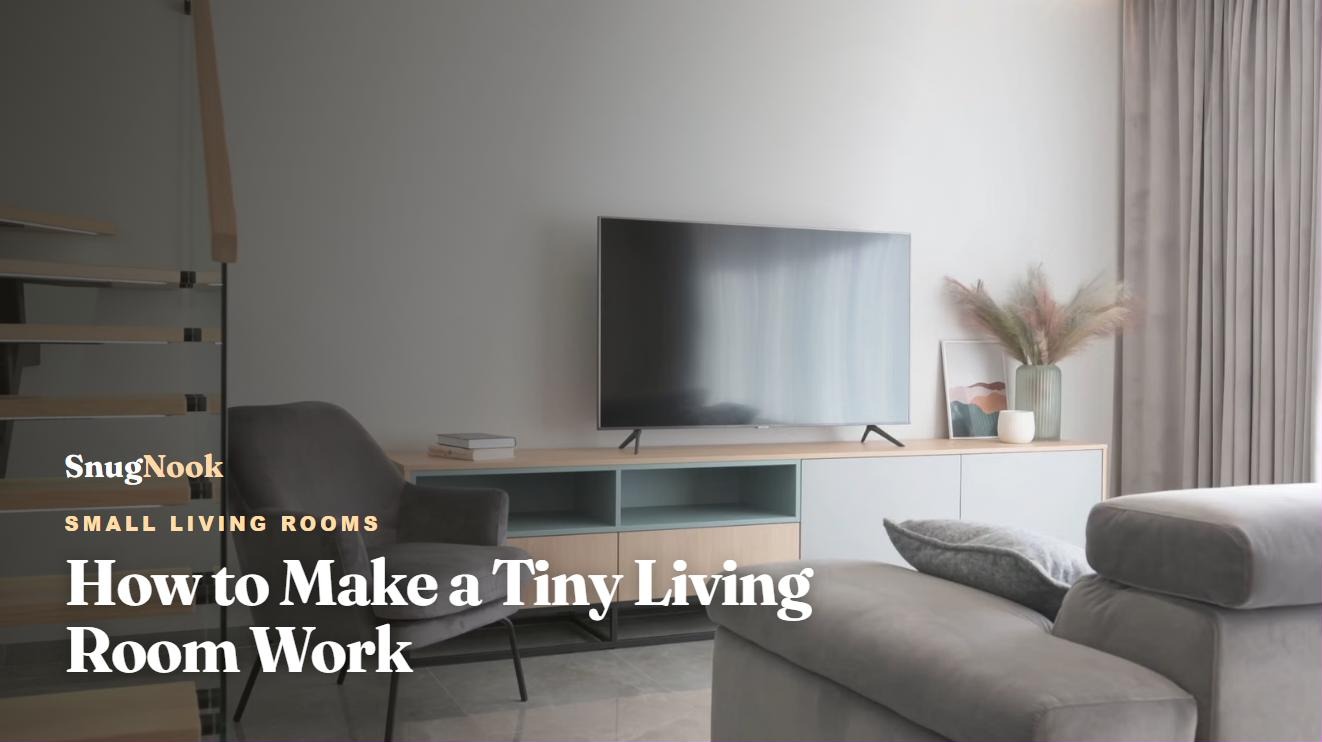
The living room asks more of its square footage than any other room in a small home. It's where you unwind, watch things, host the occasional friend, work from the couch, and — in a lot of apartments — sleep the visiting relative. Cram all of that into a room the size of a large bedroom and it's easy to end up with a space that feels crowded and works at none of its jobs. The fix isn't more clever gadgets; it's a few deliberate choices about what furniture you buy, how hard each piece works, and where the light and the eye land. Get those right and a genuinely small living room can feel calm, open, and bigger than it measures. Here's how.
Furnish a small living room with fewer, correctly-sized pieces that each do two jobs, then use light and one big rug to make it feel larger. Scale the sofa to the room instead of the showroom, choose a coffee table and ottoman that hide storage, keep the window and floor clear, and anchor everything on a rug that's big enough. Those moves do more than any amount of decor.
Start with one anchor
Every good small living room is organized around a single focal point — the TV, a window, the sofa itself — with the seating oriented toward it. Trying to serve two anchors (a TV on one wall and a fireplace on another) is what leaves small rooms feeling scattered, with furniture twisted to split the difference. Pick the one that matches how you actually use the room and commit; everything else arranges around it.
Placement is its own skill, and it's where a lot of the "why does this feel cramped" comes from — bed-against-wall, clear paths, the works. We cover the full arrangement playbook in our small living room layout guide; this guide is about what to put in the room and how to make it feel bigger once it's arranged.
Scale the furniture to the room
The most common small-living-room mistake is furniture built for a bigger space. A deep sectional that swallows the floor, an oversized coffee table you edge around, a bulky recliner — each one makes the room feel smaller than a properly scaled piece would. In a tight room, an apartment-depth sofa or a loveseat often seats the same number of people while giving back a foot or more of precious floor.
Two rules make the difference. First, favor pieces on visible legs: furniture raised off the floor lets light and floor show underneath, which reads as airier than a skirted block sitting flush to the ground. Second, favor a few correctly-sized pieces over a crowd of small ones — the "it's a small room so I'll buy small things" instinct fills the floor with clutter and backfires. Choosing the sofa is the biggest single decision here, and we compare the best compact options — loveseats, apartment sofas, small sectionals, and sleepers — in our best sofas for small living rooms roundup. For the rest of the furniture, our space-saving furniture guide is built around this same scale-it-down principle.
Make every piece store something
In a small living room, storage can't live in a dedicated cabinet you don't have room for — it has to hide inside the furniture that's already earning its footprint. This is the single highest-leverage idea for a tight space: every major piece should do its obvious job and stash something.
A storage ottoman in the middle of the room is a coffee table, a footrest, extra seating, and a hidden bin all at once — the most space-efficient object you can put in a small living room, which is why we rate them so highly in our storage ottomans guide. A lift-top or drawer coffee table hides remotes, chargers, and clutter under the surface you already need; see our storage coffee tables roundup. A slim console behind a floated sofa turns a dead gap into a working ledge, and a few floating shelves put books and decor up the wall instead of on the floor. Add a sleeper sofa if the room ever moonlights as a guest room, and the living room quietly absorbs the storage a small home never has enough of.
Make it feel bigger than it is
Beyond arrangement, a handful of choices make a small living room read as larger. Keep the floor visible — the more uninterrupted floor the eye can see, the bigger the room feels, which is the real payoff of leggy furniture and fewer pieces. Hang or lean a large mirror, ideally opposite or beside a window, to bounce daylight and read as extra depth. Lay one rug that's big enough — front legs of the seating on it at minimum — because a too-small rug marooned in the center makes everything look smaller. Keep the window clear of tall furniture so the light keeps working. And lean lighter and leggier when you swap a piece: a room of dark, floor-hugging furniture feels smaller than the same room in lighter, raised pieces. The full set of visual levers lives in how to make a small room look bigger; layered warm lighting does a lot of the work too, covered in our cozy small-space lighting guide.
Small living room sizing cheat-sheet
Buying furniture for a small living room is mostly a sizing problem. These are the rough targets we aim for — size down from what a showroom will push you toward:
| Piece | For a small living room | Why |
|---|---|---|
| Sofa length | 58–72 in (loveseat to apartment sofa) | Seats 2–3 without eating the wall; measure your doorway too. |
| Sofa depth | 32–36 in | Shallow keeps floor open; deep "cloud" sofas swallow a small room. |
| Coffee table | ~½ the sofa's length | Leaves 14–18 in between sofa and table to reach and pass. |
| Area rug | 5×7 to 8×10, front legs on it | Too-small rugs shrink a room; size up until the seating sits on it. |
| TV size vs. viewing distance | screen (in) ≈ distance (in) ÷ 1.6 | e.g. ~8 ft (96 in) away suits a ~55–60 in TV. |
| Walking path through the room | 30+ in | Enough to pass without turning sideways. |
| Console / sofa table depth | ≤ 12 in | Slim enough to sit behind a sofa without stealing the path. |
The one people get wrong most: the rug. A 4×6 stranded in the middle of the floor is the fastest way to make a small living room look smaller — size up until at least the front legs of every seat rest on it.
Mistakes that shrink a living room
A few habits make a small living room feel smaller than it is. The oversized sofa or sectional that fits the family but not the room — scale to a loveseat or apartment sofa. The too-small rug marooned in the center. Blocking the window with a tall bookcase, killing the daylight that opens the room. The furniture ring — everything jammed against the walls around an empty middle, which reads as a waiting room (pull seating a few inches off the wall instead; see the layout guide). And too many small pieces: every extra side table and accent chair is floor you gave away. Edit ruthlessly and keep only what earns its footprint.
Common questions
How do you make a small living room look bigger?
Keep the floor and the window clear, choose furniture on legs so light shows underneath, and lay one large rug that the seating sits on. Add a big mirror near a window to bounce daylight, and edit down to a few correctly-sized pieces rather than a crowd of small ones. Scale the sofa to the room — a loveseat or apartment sofa over a deep sectional — and the whole space opens up.
What size sofa fits a small living room?
Aim for 58 to 72 inches long and 32 to 36 inches deep — a loveseat seats two, an apartment sofa seats three, and both leave far more floor than a deep sectional. Measure your doorway and hallway too, since getting the sofa into a small apartment is often the real constraint. Our sofa roundup breaks the options down by room and use.
How can a small living room work as a guest room too?
A sleeper sofa or a convertible sofa bed lets the living room double as a guest room without a dedicated piece of furniture. Pair it with a storage ottoman that hides spare bedding, and the room switches from lounge to guest room in a minute. We compare the best compact options in our sleeper sofas and small sofas guides.
Our product picks
68" Modern Loveseat Sofa
An apartment-scaled loveseat that seats two in the footprint a bulky sofa wastes on one. Slim arms and visible legs keep a small room feeling open. See more options in our sofas roundup.
Check price on Amazon →35" Large Square Storage Ottoman
Coffee table, footrest, extra seat, and hidden bin in one soft, corner-free block — the most space-efficient thing you can put in the middle of a small living room.
Check price on Amazon →Washable Neutral Area Rug (5×7)
The cheapest way to make a small living room read as one designed space. Size up so the front legs of your seating rest on it; a too-small rug makes everything look smaller.
Check price on Amazon →Antok 71" Full-Length Leaning Mirror
Lean it near a window and it bounces daylight around and reads as extra depth — the cheapest way to make a small living room feel larger. No drilling to lean it.
Check price on Amazon →BAYKA Floating Wall Shelves (Set of 3)
Put books, plants, and decor up the wall instead of on the floor. Getting things off the floor is what makes a small living room read as bigger.
Check price on Amazon →Start by editing, not buying: pull out the pieces that don't earn their footprint, then scale the sofa and add one big rug. A small living room almost always works better with less in it — the trick is making the few pieces that stay do more than one job.