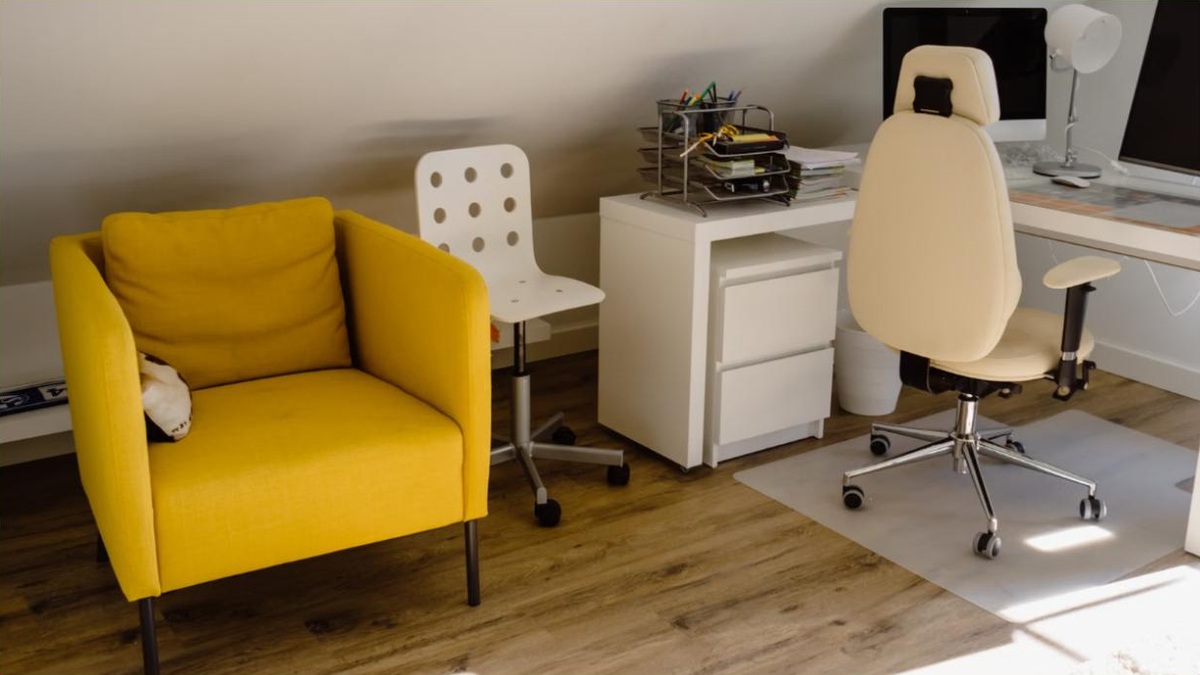
The desk chair is the piece a small-space office almost always gets wrong. A big padded gaming or executive chair looks fine in a showroom, then sits in the middle of a studio like a parked car — arms too wide to slide under the desk, back too tall, wheels too far out into the walking path. In a small space a chair has two jobs: hold you comfortably through a workday, and get out of the way the rest of the time. The best ones tuck fully under the desk so they take zero extra floor, fold flat, or have a footprint small enough that they read as furniture rather than office equipment. Get it right and your workspace doesn't eat the room it lives in. Here's how the styles compare and the specific chairs worth buying.
For most small spaces, an armless task chair is the best office chair — with no armrests it slides completely under the desk when you're done, giving back the floor a bulky chair blocks, while still supporting you through a full day. If you want more back support, a compact ergonomic mesh chair delivers it in a small footprint; a folding chair stores flat; a kneeling chair takes almost no room; a drafting stool suits a tall or standing desk; and a low-profile executive chair looks the part without the bulk. Below, the best pick for each situation and the one dimension to measure first.
How to choose a small-space office chair
Three things decide whether a chair helps or crowds a small workspace, and the first is whether it disappears.
Can it tuck fully under the desk? This is the make-or-break test in a small space. A chair that slides all the way under the desk when you stand up takes zero extra floor and keeps the walking path clear; one whose armrests hit the desk edge juts out into the room permanently. Armless chairs win here by default — measure your desk's apron height (the clearance under the desktop) and, if you want arms, confirm they clear it or are removable. A chair that vanishes under the desk effectively costs you no floor at all, which is the whole game in a studio.
Match the footprint and base to the room. A five-star caster base is stable but wide; in a very tight nook, a smaller base or a chair on a single pedestal frees more floor, and a folding chair removes the footprint entirely between uses. Watch the overall height too — a tall-backed chair visually fills a small room and blocks sight lines, while a mid- or low-back chair keeps things open. Rolling casters help you move in and out of a tight spot, but on a hard floor in a studio a chair that glides too freely wanders; look for carpet casters or add a small mat.
Don't trade your back for the square footage. The temptation in a small space is to grab the smallest, cheapest stool and call it done — but if you work full days, you'll pay for it in your neck and lower back. Decide honestly how long you sit: for full workdays, prioritize lumbar support and seat comfort even in a compact chair; for occasional or short sessions, a folding chair or stool is fine. The ergonomics matter as much here as in any office, which is why we pair every small-desk setup with a proper screen height too — see our monitor stands and desk risers roundup. The chair and the screen are the two things worth spending on in the tiny-apartment home office.
The chairs compared
| Pick | Type | Footprint move | Best for |
|---|---|---|---|
| Armless Rolling Task Chair | Armless task | Tucks fully under desk | The all-rounder |
| Sweetcrispy Mesh Armless | Ergonomic mesh | Tucks under, breathable | Full workdays |
| Tervo Model U Folding | Folding office chair | Folds flat to store | Occasional use / studios |
| Ergonomic Kneeling Chair | Kneeling posture | Tiny footprint | Posture & tight nooks |
| Yunhpostur Drafting Stool | Tall drafting chair | Suits high/standing desk | Standing-desk setups |
| BERYTH Mid-Back Chair | Low-profile executive | Compact, looks the part | Living-room offices |
Armrests and base widths vary by listing — measure your desk's under-clearance so the chair tucks all the way in.
Our product picks
Armless Rolling Task Chair (PU Leather)
An armless rolling desk chair that slides completely under the desk when you stand, so it takes zero extra floor in a small room. The wipe-clean PU leather looks tidy in a living-room workspace, and the adjustable height and swivel cover the basics for everyday work. The default pick for most small spaces: comfortable enough for real work, and gone under the desk the moment you're done.
Check price on Amazon →Sweetcrispy Small Armless Mesh Ergonomic Chair
A compact armless chair with a breathable mesh back and real lumbar support, so it holds you comfortably through a full workday while still tucking under the desk. The mesh keeps you cool and the small frame suits a tight nook. The pick when you actually work eight hours at your small desk and won't trade your back for the floor space — support and a small footprint in one.
Check price on Amazon →Tervo Model U Folding Office Chair
An ergonomic office chair designed for small spaces that folds flat to slide behind a door or under the bed when you're not working — the chair for a studio where even a tucked-under chair is one object too many. It sets up in seconds and stores in inches. The pick for occasional work sessions or a one-room apartment that has to be a living space first and an office second.
Check price on Amazon →Ergonomic Kneeling Chair with Backrest
A kneeling posture chair with a backrest and footrest that takes almost no floor and encourages an upright, engaged posture that fights the small-desk slump. It slides under or beside a desk and doubles as a perch in a room with no space for a full chair. The pick for a very tight nook, or anyone who wants to vary their posture through the day without adding a bulky seat to the room.
Check price on Amazon →Yunhpostur Drafting Chair with Backrest
A tall drafting-height chair with a footring and backrest, made for a standing-height desk or a converter — the seat a small standing-desk setup needs so you can perch without dropping the whole desk down. Armless and adjustable, it tucks under a high desk and swivels out of the way. The pick when your small office uses a tall or sit-stand desk rather than a standard-height one.
Check price on Amazon →BERYTH Mid-Back Home Office Chair (No Arms)
A low-profile, armless mid-back chair in a walnut-and-black finish that reads as a piece of furniture rather than office gear — so it looks right in a living room or bedroom that moonlights as an office. The compact back keeps sight lines open, and it still tucks under the desk. The pick when the chair will be on show in a shared room and you want it to blend in after hours.
Check price on Amazon →Start with whether the chair disappears — an armless task chair that tucks fully under the desk costs you no floor, which matters more in a small space than any other feature. Choose a folding or kneeling chair if even that's too much, a drafting stool for a tall desk, and don't skimp on support if you work full days. Then get your screen to eye level with our best monitor stands and desk risers, and see the whole workspace plan in our guide to setting up a home office in a tiny apartment — including the compact desks these chairs pull up to.
Common questions
What kind of office chair is best for a small space?
An armless task chair, for most people. Without armrests it slides all the way under the desk when you stand, so it takes no extra floor and keeps the walking path clear — the single most important trait in a small room. If you need more back support for full workdays, a compact ergonomic mesh chair does the same tuck-under trick with lumbar support added. Reserve folding and kneeling chairs for studios where even a tucked-under chair is one object too many.
Are armless office chairs comfortable enough for all-day work?
They can be, and many people find them fine — armrests aren't essential for comfort if the seat and back support are good, and some ergonomists argue armrests encourage slouching anyway. For all-day work, prioritize a supportive seat, adjustable height, and lumbar support over the presence of arms. If you rely on armrests, look for a compact chair with removable or flip-up arms so it still tucks under the desk. For short or occasional sessions, an armless chair or stool is more than enough.
How do I fit an office chair in a studio apartment?
Choose one that disappears. An armless chair tucks fully under the desk; a folding chair stores flat behind a door or under the bed; a kneeling chair or stool takes minimal floor. Measure the clearance under your desktop so the chair rolls all the way in, and favor a mid- or low-back model so it doesn't visually fill the room. The goal is a chair that's there when you work and effectively gone the rest of the time.
Is a kneeling chair or a folding chair better for a tiny office?
It depends on whether the chair stays out. A kneeling chair takes almost no floor but usually lives in the room full-time and suits people who want an active, upright posture. A folding chair removes its footprint entirely between uses, which is better for a one-room apartment that has to be a living space first. Pick the kneeling chair if you'll sit in it daily and want the posture benefit; pick the folding chair if you want the office to vanish when the workday ends.