The TV stand is one of the largest pieces of furniture in a small living room, and it has to do more than hold up a screen. It's where the console, the streaming boxes, the remotes, the cables, and usually a drawer's worth of random living-room clutter all live. Buy one built for a big room and it eats a whole wall; buy one too small and the clutter spills onto the floor. The trick in a tight space is matching the stand to where the TV actually goes — along a wall, in a dead corner, or floating off the floor entirely — and getting the storage without the bulk. Get it right and the biggest object on the wall pulls its weight instead of dominating the room. Here's how the styles compare and the specific stands worth buying.
For most small living rooms, a compact media console sized to the room — not the TV's maximum — is the best TV stand, holding the screen plus closed storage for the clutter in a footprint that leaves the wall breathing room. If the TV goes in a corner, a corner stand reclaims dead space; if floor space is precious, a floating console frees it entirely; an open-shelf unit keeps things airy; and a fireplace stand adds warmth in the same footprint. Below, the best pick for each situation and the width to measure first.
How to choose a small-room TV stand
Three things decide whether a TV stand helps a small room or crowds it: how wide, where it sits, and closed versus open storage.
Size the stand to the room, and a bit wider than the TV. The rule of thumb is a stand a few inches wider than the TV on each side so the screen doesn't overhang — but in a small room, don't just buy the biggest stand your TV allows. Measure the wall and leave breathing room at each end so the stand doesn't run wall-to-wall and box the room in. A good target is a stand no wider than about two-thirds of the wall it sits on. And check the depth: a stand under 16 inches deep keeps the walking path clear, which matters more here than the extra storage a deep cabinet would add.
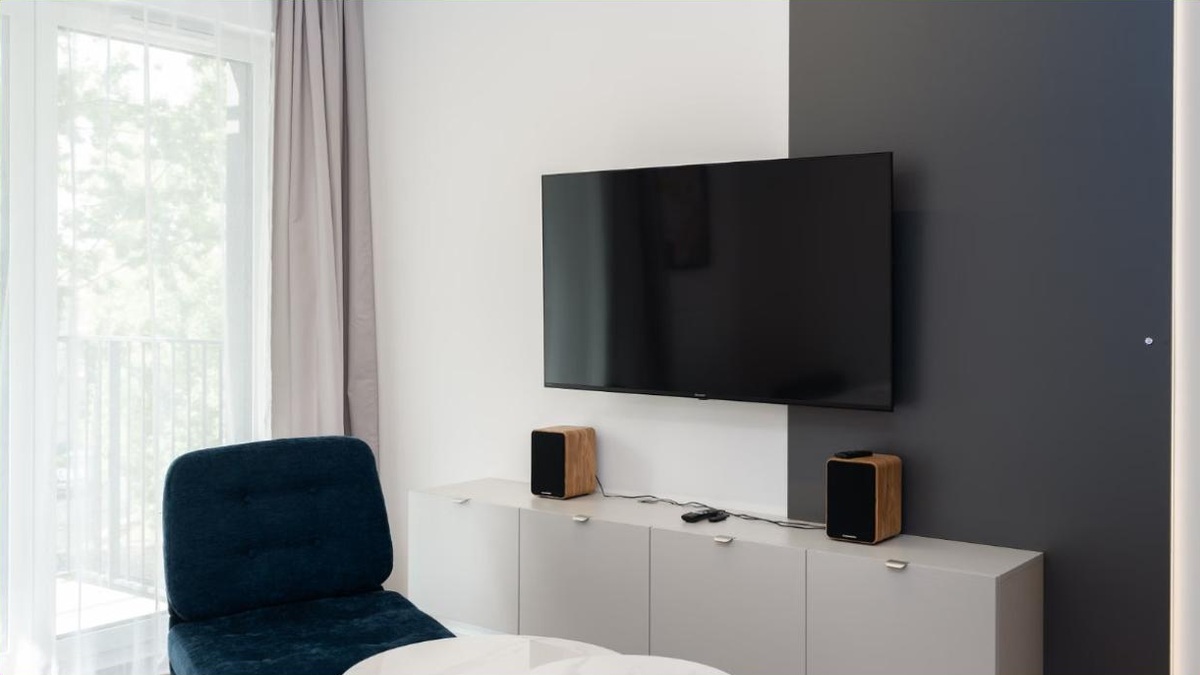
Decide where the TV goes — wall, corner, or floating. This is the move that unlocks a small room. Along a wall, a standard console works. In a corner, a corner stand turns dead triangular space into the media zone and frees your main walls for a sofa or shelving. And a floating, wall-mounted console gives back the floor underneath entirely — the single biggest visual win, because visible floor is what makes a small room read as bigger, the same principle that runs through making a small room look bigger. Pick the placement first; the stand follows from it. If you'll wall-mount the TV itself, the stand only has to hold the boxes, so it can be smaller or float.
Closed storage hides the clutter; open shelves keep it airy. A console with doors or drawers hides the streaming boxes, cables, and clutter behind a clean front — best if your living room doubles as an office or guest room and needs to look tidy fast. Open shelves feel lighter and airier and show off books or baskets, but everything on them is on display, so they suit a curated, minimal room. Many small rooms do best with a mix: a couple of closed compartments for the ugly stuff and one open shelf for a plant or a speaker. This is the same "every piece earns its footprint with storage" logic from our small living room ideas guide; the coffee table is the other half, covered in our storage coffee tables roundup.
The TV stands compared
| Pick | Type | Placement | Best for |
|---|---|---|---|
| WLIVE Compact Console | Small media console | Along a wall | The all-rounder |
| Furologee Open-Shelf | Open industrial | Along a wall | An airy, light look |
| DUMOS LED Console | Modern w/ charging | Along a wall | Tech & cable management |
| oneinmil Fireplace Stand | Fireplace console | Along a wall | Warmth + media in one |
| FITUEYES Corner Stand | Corner unit | In a corner | Reclaiming dead corners |
| Snughome Floating Console | Wall-mounted | Off the floor | Maximum floor space |
Widths and TV-size ratings vary by listing — measure your wall and your TV before buying, and leave breathing room at each end.
Our product picks
WLIVE Compact TV Stand with Storage Cabinet
A small-scale media console with a closed cabinet and open shelf, sized for a 43-inch TV and a tight room rather than a showroom wall. It hides the streaming boxes and clutter behind a door while keeping a shelf for what you want on show. The default pick for most small living rooms: enough storage to matter, a footprint that leaves the wall breathing room.
Check price on Amazon →Furologee Open-Shelf Entertainment Center
An open-shelf TV stand in rustic wood and metal that reads as light and airy because you can see through and under it — no bulky closed box weighing down the room. The open tiers hold a console, a soundbar, and a few baskets for the clutter. The pick for a minimal room where an airy, leggy piece keeps the space feeling open rather than filled.
Check price on Amazon →DUMOS LED TV Stand with Charging Station
A modern console with a built-in power/charging station and LED accent lighting, so the boxes, chargers, and cables all plug in and route through one spot instead of trailing across the floor. Open and closed storage handle the rest. The pick for a gadget-heavy setup where cable management and charging in one place keep a small room from looking like a server closet.
Check price on Amazon →oneinmil Fireplace TV Stand (36" Electric Fireplace)
A media console with a built-in electric fireplace and LED flames, giving a small living room a cozy focal point and TV storage in a single footprint — no separate heater taking up floor. The fireplace runs with or without heat, and the cabinets hide the media clutter. The pick when you want warmth and ambiance without spending a second piece of floor on a standalone heater.
Check price on Amazon →FITUEYES Corner TV Stand
A corner-shaped console that turns the dead triangular space where two walls meet into the media zone, freeing your main walls for a sofa, shelves, or nothing at all. It fits a 32-to-65-inch TV into a spot most furniture wastes, with cable management built in. The pick when angling the TV into a corner opens up the rest of a small room — often the smartest layout a tight space has.
Check price on Amazon →Snughome Floating Wall-Mounted TV Console
A wall-mounted console that floats off the floor, giving back the entire strip of floor a standing stand would occupy — the single biggest way to make a small living room read as larger, since visible floor is what the eye reads as space. It holds the boxes on a clean shelf with cable routing. The pick for the airiest possible look, especially paired with a wall-mounted TV above it.
Check price on Amazon →Decide where the TV goes first — a wall, a corner, or floating — because that choice does more for a small room than any feature. Size the stand to the wall rather than to the TV's maximum, keep the depth under 16 inches, and lean toward closed storage if the room needs to tidy fast. Then handle the rest of the room with our small living room ideas guide, pair it with a slim console table behind the sofa, and get the arrangement right with our small living room layout guide.
Common questions
What size TV stand do I need for a small living room?
Buy one a few inches wider than your TV on each side so the screen doesn't overhang, but no wider than about two-thirds of the wall it sits on, so it doesn't box the room in. Keep the depth under about 16 inches to protect the walking path. In a small room, resist buying the biggest stand your TV allows — size to the wall and leave breathing room at each end, and the whole space feels less crowded.
Where should the TV go in a small living room?
Wherever it frees the most usable space. Along a wall is standard, but angling the TV into a corner turns dead triangular space into the media zone and frees your main walls — often the smartest move in a tight room. Wall-mounting the TV and pairing it with a floating console gives back the floor entirely, which makes the room read as bigger. Pick the placement that opens up the rest of the room, then choose the stand to match.
Are floating TV stands good for small spaces?
Very. A wall-mounted, floating console gives back the whole strip of floor a standing stand would occupy, and visible floor is exactly what makes a small room feel larger. It also looks clean and modern, especially under a wall-mounted TV. The trade-offs: you have to mount it into studs or use proper anchors for the weight, and it holds a bit less than a full cabinet — but for maximizing floor space and an airy look, it's the strongest choice.
Open shelves or closed cabinet for a TV stand?
Closed cabinets hide the streaming boxes, cables, and clutter behind a clean front, which is best if your living room has to look tidy fast or doubles as an office or guest space. Open shelves feel lighter and airier and show off books or baskets, but everything sits on display. A mix is often ideal in a small room: closed compartments for the ugly gear and one open shelf for a plant or speaker. Choose by how disciplined you want to be about what shows.