A bar stool is the one seat in a small kitchen that has to disappear when you're done with it. A dining chair at least pulls up to a table; a bar stool sits out in the open at the counter or island, in the main walkway, so if it doesn't slide fully underneath it becomes something you edge around a dozen times a day. That single trait — does it tuck all the way under the overhang — matters more in a tight kitchen than the color, the material, or the price. Get it right and two stools vanish under the counter and give you a place to eat, work, and seat a guest without stealing any floor. Get it wrong and you've bought furniture that lives in the aisle. The other half of the problem is height: a stool an inch too tall or too short for your counter is uncomfortable forever and can't be fixed. Here's how the types compare and the specific stools worth buying.
For most small kitchens, a backless counter-height stool is the best bar stool — with no back to catch on the counter's edge it slides completely out of the walkway when you're not using it, seats a guest in seconds, and takes almost no visual space. If you're not sure of your counter height, an adjustable swivel stool fits anything; a folding stool stores flat for guests; a clear acrylic stool visually disappears; an upholstered stool with a back is the comfortable pick for an eat-in counter; and a slim set of three lines up along a narrow island. Below, the best pick for each kitchen and the two measurements that decide whether a stool fits.
How to choose a small-space bar stool
Two measurements decide whether a bar stool fits your small kitchen, and people get the first one wrong constantly — then sit uncomfortably for years.
Measure the counter, then subtract — seat height is the whole game. The single most common bar-stool mistake is buying for the wrong height, and it can't be corrected after the fact. Standard kitchen counters are about 36 inches, which calls for a counter-height stool with a seat around 24–26 inches. A raised bar or island runs 40–42 inches and needs a taller bar-height stool around 28–32 inches. The rule that makes a stool comfortable rather than cramped or dangling is 10 to 12 inches of clearance between the seat top and the underside of the counter — enough room for your legs. Measure from the floor to the underside of your counter, subtract 10 to 12 inches, and that's your seat height. If your counter is an oddball height or you're not sure, buy an adjustable stool and the problem solves itself. Getting this one number right is the difference between a seat you use every day and one that goes in a closet.
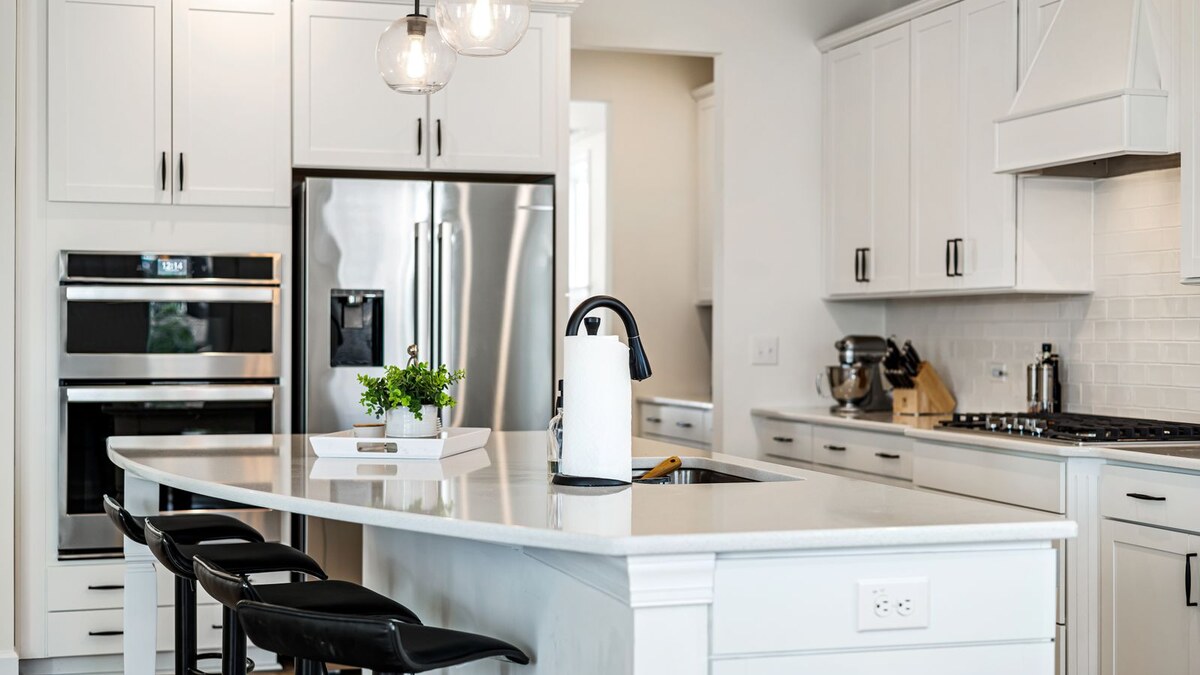
Backless, and check that it tucks under the overhang. In a small kitchen the second question is whether the stool gets out of the way, and backless is almost always the answer. A stool with no back slides completely under the counter when you're not sitting on it, so it clears the walkway, hides its bulk, and lets you see across the room instead of past a row of chair-backs — which is what keeps a small kitchen feeling open. Before you buy, measure your counter's overhang (how far the top extends past the cabinets below): a backless stool needs to slide under that overhang, so check the stool's seat depth against it. A backed, upholstered stool is more comfortable for lingering at an eat-in counter, but it stays visible and takes real space, so only choose one if comfort matters more than disappearing. If even a tucked stool is too much for your footprint, the better move may be seating that folds away entirely — the same logic behind our folding and stackable dining chairs for a small table.
The bar stools compared
| Pick | Type | Height | Best for |
|---|---|---|---|
| Backless Saddle (Set of 2) | Backless, fixed | Counter 26" | The all-rounder |
| VATROS Swivel | Adjustable, swivel | Counter–bar | Any counter height |
| Amazon Basics Folding | Folding, backless | Counter/bar | Stores flat |
| JEARGE Acrylic (Set of 2) | Clear, backless | Counter | Visually disappears |
| UVV Upholstered (Set of 2) | Backed, padded | Counter | Comfort at an eat-in |
| RNKSFX (Set of 3) | Backless, slim | Counter | A narrow island |
Seat heights and depths vary by listing — measure from the floor to the underside of your counter, subtract 10–12 inches for the seat height, and check the seat depth against your counter's overhang.
Our product picks
Backless 26" Saddle Counter Stools (Set of 2, 300 lb)
Backless saddle-seat stools at counter height that slide completely under the overhang when you're not using them, so they clear the walkway and keep a small kitchen feeling open instead of blocked by chair-backs. The contoured wood seat is comfortable without a back, and they hold 300 pounds. The default pick for most small kitchens: two of these tuck away to nothing, seat a guest in seconds, and add warmth without stealing floor or sightlines — exactly what a tight counter needs.
Check price on Amazon →VATROS Height-Adjustable Swivel Bar Stools (Set of 2)
Swivel stools with a gas-lift that adjusts the seat across the counter-to-bar range, so they fit a 36-inch counter or a 42-inch island equally and solve the single hardest bar-stool question — what height do I actually need. The 360° swivel makes getting in and out easy in a tight spot. The pick when you're unsure of your counter height or might move: adjust once and they're right, and the swivel means you don't have to scoot the whole stool to turn around in a cramped kitchen.
Check price on Amazon →Amazon Basics Folding Bar Stool with Footrest
A sturdy folding bar stool with a footrest that folds flat and slides behind a door or into a closet when you don't need it, then comes out for a guest or an extra seat at the counter. It's the move for a kitchen too small for permanent stools, or for occasional overflow seating you'd rather not see every day. The pick for seating that disappears entirely: unlike even a tucked backless stool, a folded one takes zero floor, so you only give up the space when someone's actually sitting.
Check price on Amazon →JEARGE Clear Acrylic Bar Stools (Set of 2)
Backless counter stools molded from clear acrylic, so light passes straight through them and they visually vanish — the trick that makes a small kitchen feel larger, because the eye reads an unbroken floor instead of two solid stools. They wipe clean and never clash with anything. The pick when you want seating that takes up no visual weight at all: clear furniture is the classic small-space move for exactly this reason, and these tuck under the counter on top of disappearing into it.
Check price on Amazon →UVV Upholstered Counter Stools with Back (Set of 2)
Padded, upholstered counter stools with a low back and a footrest, for the small kitchen where the counter doubles as the dining table and you actually sit through a meal. The back and cushion make lingering comfortable in a way a hard backless stool doesn't. The pick when comfort beats disappearing: the low back still tucks most of the way under, so you get a proper seat for eating and working without the full bulk of a dining chair — the compromise for a counter that has to be your table too.
Check price on Amazon →RNKSFX Backless Counter Stools (Set of 3)
A set of three slim backless stools designed to line up along a kitchen island or a long counter, seating three where two bulky chairs would crowd the space. The narrow footprint and no-back design let them sit close together and tuck fully under. The pick for a galley island or a long peninsula: three slim stools in a row give a small kitchen real seating capacity for guests or a family, and they all slide away under the lip when the meal's over.
Check price on Amazon →Start by getting the height right — measure to the underside of your counter and subtract 10 to 12 inches — then choose backless so the stool tucks fully under and keeps the walkway clear. A backless saddle set is the best all-rounder; go adjustable if you're unsure of your height, folding if you want seating that stores flat, acrylic to make it visually vanish, upholstered for a counter that's also your table, and a set of three for a narrow island. Then pair the stools with the right surface in our space-saving dining tables guide, add fold-away seating for a table with our folding and stackable dining chairs, and see where a rolling island fits in our kitchen carts for small kitchens roundup.
Common questions
What height bar stool do I need for my counter?
Measure from the floor to the underside of the counter and subtract 10 to 12 inches — that gap is what makes a stool comfortable. A standard 36-inch kitchen counter needs a counter-height stool with a seat around 24–26 inches; a raised bar or island at 40–42 inches needs a bar-height stool around 28–32 inches. If your counter is an unusual height or you're not certain, buy an adjustable stool with a gas-lift seat and you can dial it in exactly, which also future-proofs it if you move.
Are backless bar stools better for small kitchens?
Usually, yes. A backless stool slides completely under the counter when you're not sitting on it, so it clears the walkway, hides its bulk, and lets your eye travel across the room instead of stopping at a row of chair-backs — all of which keep a small kitchen feeling open. A backed stool is more comfortable for long sits at an eat-in counter, but it stays visible and takes real space. Choose backless unless the counter is your main dining spot and comfort through a whole meal matters more than disappearing.
How many bar stools fit at a small island or counter?
Allow about 26 to 30 inches of counter width per stool so people aren't bumping elbows. A short 4-foot counter comfortably seats two; a 6-foot island or peninsula fits three slim backless stools. Measure your usable counter length (skip any part over a cabinet or against a wall), divide by 28 inches, and round down. Slim, backless stools pack closer together than wide upholstered ones, so if you want to seat three in a tight run, narrow backless stools are the way to get there.
Will bar stools tuck under my counter?
Only if the seat clears the overhang, so measure before you buy. Check how far your countertop extends past the cabinets below (the overhang) and compare it to the stool's seat depth — a backless stool needs to slide under that lip to get out of the way. Standard overhangs are small, around 1 to 1.5 inches, so most backless stools tuck partway; a true pull-up-and-disappear fit needs either a deeper overhang or a slim stool. Backed and upholstered stools tuck far less, which is the trade-off for their comfort.