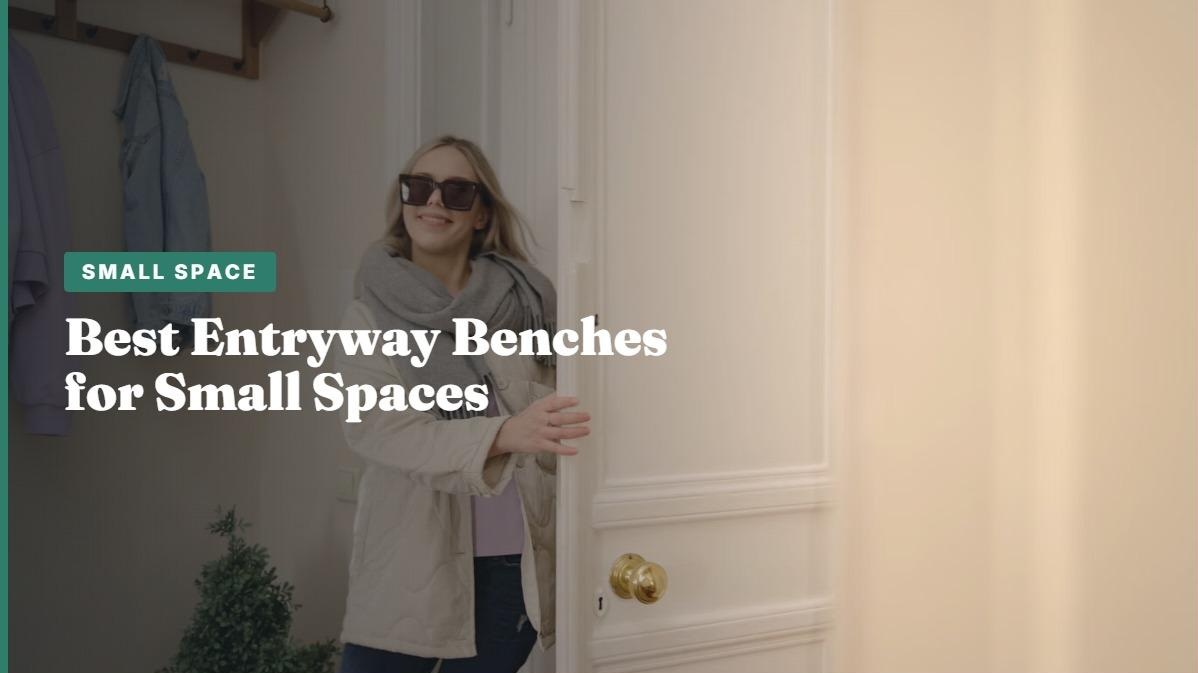
A bench is the hardest-working piece you can put by the door, because it does three jobs in the space of one. You sit on it to pull your shoes on, you stash the pairs underneath, and you drop your keys and bag on top the second you walk in. In a small entry that triple duty is the whole point — one narrow object replaces a chair, a shoe rack, and a console. The trick is buying one that hugs the wall instead of jutting into the walkway, and matching the storage style to your mess: open shelves for shoes you grab daily, a flip-top or lift-top for the clutter you'd rather hide. Here's how they compare and the specific benches worth buying.
For most small entryways, a slim shoe-storage bench about 10–12 inches deep is the best pick — it seats you, stores this season's shoes on open tiers, and keeps a shallow footprint against the wall. If you'd rather hide the clutter, a flip-top or lift-top bench conceals everything under the seat; if the bench doubles as seating you'll actually use, get one with a cushion. Below, the best pick for each situation and the depth to check first.
How to choose (and what to measure)
Three things decide whether an entryway bench works in a small space, and only one is style.
Depth is everything. In a narrow entry, the bench's depth decides whether you squeeze past it or bark your shin on it every morning. Aim for around 10 to 12 inches deep so it hugs the wall and stays out of the walkway; anything deeper belongs in a mudroom, not a hallway. Length is more forgiving — a 30-inch bench seats one and stores a week of shoes, a 40-inch one seats two. Measure the wall and the doorway swing before you buy.
Open shelves or hidden storage? Open tiers under the seat are fastest for shoes you grab daily, and they keep the bench feeling light. A flip-top or lift-top hides the mess behind a lid, which suits odds and ends — gloves, dog gear, spare bags — more than muddy sneakers you're in and out of. Decide which problem you're actually solving: fast shoe access, or hiding clutter.
Will you actually sit on it? If the bench is mainly a shoe shelf you lean on, a hard top is fine and cheaper. If you want a real perch to put boots on — or a spot for a guest to sit — pay for a cushion. A padded lift-top does both: soft seat, hidden storage. This is the piece we rate highest in our small entryway organization guide, and it pairs with the wider renter-friendly upgrades playbook for a no-drill entry.
The benches compared
| Pick | Storage | Rough size | Best for |
|---|---|---|---|
| HOOBRO 3-Tier Bench | Open shelves | Slim / ~11" deep | The all-rounder |
| Solid Wood Flip-Top | Hidden under lid | 31.5" W | Hiding clutter |
| HOMEFORT Lift-Top | Hidden + cushion | 41.3" W | A padded seat |
| Small Shoe Bench | Open shelf | Compact | The tightest entries |
| 3-Tier Adjustable | Open, adjustable | 39.4" W | Boots + tall shoes |
| Solid Wood 2-Tier | Open shelves | 2 tiers | A warm, sturdy look |
Depths and widths vary by listing — measure your wall and check the depth against your walkway before buying.
Our product picks
HOOBRO Slim 3-Tier Shoe Storage Bench
Sit to pull your shoes on, store three tiers of pairs underneath, and drop your keys on top — three jobs in one narrow footprint. The slim depth hugs the wall so it stays out of the walkway, which is exactly what a small entry needs. The default pick for most doorways.
Check price on Amazon →Solid Wood Flip-Top Storage Bench (Soft-Close)
A solid wood bench whose seat flips up on a soft-close lid to hide everything underneath — gloves, leashes, spare bags — behind a clean surface. At 31.5 inches it seats one comfortably and looks like real furniture, not a shoe rack. Best when your entry clutter is stuff you'd rather not see.
Check price on Amazon →HOMEFORT 41" Lift-Top Bench with Cushion
A padded, upholstered seat over a lift-top storage compartment, so it's a genuinely comfortable perch to put boots on and a hidden bin at once. At 41 inches it seats two and reads as a considered piece of furniture. The pick if the bench needs to earn its keep as seating too.
Check price on Amazon →Small Shoe Storage Bench with Seat
A genuinely compact bench for the entries where even a standard one won't fit — a sliver of wall by the door, a studio, a narrow hall. Seats one, stores a few pairs below, and takes almost no floor. The one to buy when space is the constraint above all else.
Check price on Amazon →3-Tier Bench with Adjustable Shelves
Adjustable tiers let you make room for boots and tall shoes instead of forcing everything into fixed slots — the flexible pick if your footwear varies by season. At 39.4 inches it holds a lot while still seating you on top. Rated for serious weight, so it doubles as sturdy seating.
Check price on Amazon →Solid Wood 2-Tier Entryway Bench
A modern solid-wood bench with two open tiers, for when you want the entry to feel warm and built to last rather than flat-packed. Fewer tiers means a lighter, airier look that suits a small space. The upgrade pick on materials and looks.
Check price on Amazon →Pick the depth first, the storage style second. A slim open-shelf bench solves most small entries; step up to a flip-top or cushioned lift-top only if hiding clutter or comfortable seating matters more than grab-and-go shoes. Then get the coats off the floor above it with our best wall-mounted coat racks, and see the full small entryway organization guide for the whole two-foot setup.
Common questions
How deep should an entryway bench be for a small space?
Around 10 to 12 inches deep. That's enough to seat you and store a row of shoes while still hugging the wall so you're not squeezing past it in a narrow hall. Deeper benches (16+ inches) suit a mudroom but eat a walkway in a small apartment. Always measure the depth against your clear floor space, not just the wall length.
Are storage benches good for shoes?
Yes — a shoe-storage bench is one of the most efficient entry pieces you can buy, since it seats you, stores the pairs, and gives you a drop surface in one footprint. Open-tier benches are best for shoes you wear daily; flip-top or lift-top benches suit clutter you'd rather hide. Keep only the current season's shoes on it and store the rest elsewhere so it doesn't overflow.
What's the best entryway bench if I can't drill?
All of these are freestanding — they just stand against the wall, no drilling required, so any of them works in a rental. A bench is actually the no-drill backbone of an entry: it delivers seating and shoe storage without a single hole. Pair it with adhesive or over-the-door hooks for coats and you've got a full entryway that leaves the walls untouched.
How do I keep wet shoes from ruining the bench?
Slide a waterproof boot tray onto the lowest shelf so meltwater and mud collect there instead of on the wood. For a bench with a fabric or upholstered base, keep the wettest shoes on a tray beside it rather than inside. This matters most right by the door in winter, where everything arrives dripping.