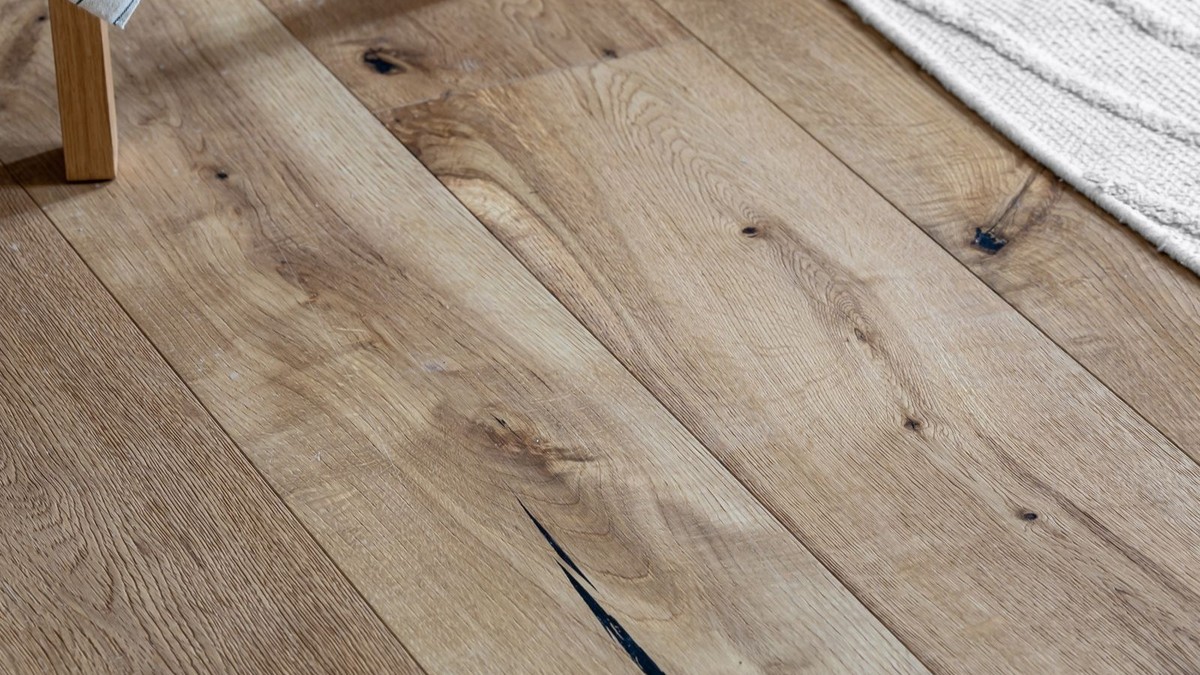
The floor is the biggest surface in any rental and usually the one you're least allowed to touch — which is exactly why a scuffed, cracked, or builder-beige floor drags the whole place down. Peel-and-stick floor tiles are the fix landlords never think to forbid: self-adhesive vinyl planks and squares that lay straight over the existing floor, look like real wood or stone from standing height, and peel back up when the lease ends. No glue bucket, no saw, no permission slip. The catch is that "peel and stick" covers everything from a paper-thin decal that curls in a month to a thick, waterproof plank that survives a kitchen — so the right one depends on the room and how hard the floor works. Here's how the types compare and the specific tiles worth buying.
For most renters, a wood-look self-adhesive vinyl plank is the best peel-and-stick floor — it lays over the old floor in an afternoon, reads as real wood, and lifts off cleanly later, all for a fraction of the cost of new flooring. If you want the cheapest coverage, a big value pack does it; for a kitchen or bath, a waterproof stone or marble tile holds up to water; a roll installs fastest with the fewest seams; and a designer pattern turns a small room into a feature. Below, the best pick for each floor and the one prep step that decides whether they stay down.
How to choose peel-and-stick flooring
Three things decide whether a peel-and-stick floor looks great and comes up clean, or bubbles up in a month and costs you the deposit — and the first one happens before you lay a single tile.
The surface underneath decides everything: clean, dry, flat, and smooth. Self-adhesive vinyl bonds to the floor it's pressed onto, so it's only as good as that surface. It sticks best to clean, fully cured, smooth hard floors — existing vinyl, sealed concrete, ceramic tile, or hardwood. Vacuum and then degrease with a little rubbing alcohol so no dust or kitchen film breaks the bond, and let it dry completely. The two surfaces to be careful with are textured tile with deep grout lines (the vinyl telegraphs the grooves and can flex there — skim those lines or use a thin underlayment) and, for your deposit's sake, bare or freshly finished hardwood, where a strong adhesive can lift the finish. On a floor you want to protect, lay a layer of builder's paper or a peelable underlayment first and stick the vinyl to that, not to the landlord's floor — the single move that makes this truly reversible.
Measure the room, add 10%, and buy by the square foot — not the tile. Listings sell by the pack, and pack coverage varies wildly: a "36-pack" might be 54 square feet or half that. Measure your room's length times width for square footage, add ten percent for cuts and mistakes, and match that number to the coverage stated in the listing, not the piece count. Buy it all in one order so the batch and shade match. For cuts around cabinets and doorways you don't need a saw — score the vinyl with a utility knife and snap it, which is the whole reason this works in a rental with no tools.
Match the thickness and waterproofing to how hard the floor works. Thickness is the honest signal of quality here. Thin promotional tiles (well under 2mm) feel like stickers, show every imperfection below, and curl at the edges; thicker planks (2mm and up) feel like flooring, hide the subfloor, and stay put. For a living room or bedroom, a mid-weight wood-look plank is plenty. For a kitchen, bathroom, or laundry, buy one explicitly rated waterproof and run a bead of removable caulk at the edges, because water creeping under the vinyl is what lifts it and grows mildew. A busy rental floor is also a good place to size up an area rug over the vinyl in high-traffic lanes to spare the seams.
The floor tiles compared
| Pick | Type | Best room | Best for |
|---|---|---|---|
| Art3d Wood Plank | Wood-look vinyl plank | Living room / bedroom | The all-rounder |
| GreenFullHouse 54 sq.ft | Wood-look plank, value pack | Whole room on a budget | Cheapest coverage |
| Art3d Brown Stone | Stone-look plank | Entry / kitchen | A stone look |
| ATOPOSE Marble Tile | Waterproof marble square | Bathroom / kitchen | Wet rooms |
| auxua Woodgrain Roll | Vinyl floor roll | Small room / closet | Fastest install |
| FloorPops Bonneville | Designer marble pattern | A small feature floor | Making a statement |
Pack coverage and thickness vary by listing — measure your square footage, add 10%, and check the stated coverage before buying.
Our product picks
Art3d Wood Texture Peel-and-Stick Vinyl Plank (Rosewood)
A realistic wood-grain vinyl plank with enough thickness and texture to read as real flooring, not a sticker — the default choice for a living room or bedroom that needs to lose its dated floor. It scores and snaps with a utility knife, presses down firm on a clean surface, and lifts off at move-out. The best all-rounder here: convincing wood look, forgiving install, and reversible for renters.
Check price on Amazon →GreenFullHouse Peel-and-Stick Flooring Plank (37-Pack, 54 sq.ft)
A big 54-square-foot pack of wood-look planks that covers a whole small room for the least money, so you can do an entire bedroom or home office without the cost of real flooring. The large pack keeps the batch and shade consistent across the floor. The pick when you're covering serious square footage on a tight budget and want one order to finish the room.
Check price on Amazon →Art3d Peel-and-Stick Vinyl Floor Tiles (Brown Stone, 6x36)
Long stone-look planks that bring a natural slate or travertine feel to an entryway, kitchen, or laundry without the weight or grout of real stone. The larger format lays fast and the muted stone tone hides scuffs and dirt well in a high-traffic spot. The pick when you want the look of stone flooring in a rental and a plank you can still cut with a knife and peel up later.
Check price on Amazon →ATOPOSE Waterproof Peel-and-Stick Floor Tile (White Marble)
A waterproof marble-look square built for the rooms that ruin cheaper vinyl — bathrooms, kitchens, and laundries — where its sealed surface shrugs off splashes and wipes clean. The bright marble pattern instantly modernizes a dated bathroom floor. The pick for any floor that gets wet: buy this over a non-waterproof tile and caulk the edges so nothing creeps underneath.
Check price on Amazon →auxua Woodgrain Peel-and-Stick Vinyl Floor Roll
A continuous vinyl roll instead of individual tiles, so you unroll, press, and trim — covering a closet, small bathroom, or narrow room in one pass with almost no seams for water or dirt to sneak into. The non-slip textured surface suits a spot where loose tiles would shift. The pick for the fastest possible install and the cleanest result in a small or awkward space.
Check price on Amazon →FloorPops Bonneville Grey & White Marble Peel-and-Stick Tile
A designer marble-pattern tile (a Chris Loves Julia collaboration) that turns a small bathroom, entry, or laundry into a feature floor rather than just a fix. The bold grey-and-white pattern reads as an intentional design choice, not a rental compromise. The pick when a small floor is a chance to make a statement — the pattern does more for a tiny room than plain vinyl ever could.
Check price on Amazon →Start with the surface — clean, dry, and flat, and a peelable underlayment over any floor you need to protect — because prep, not the tile, decides whether a peel-and-stick floor lasts or lifts. Choose a mid-weight wood plank for living spaces, a waterproof tile for anywhere that gets wet, and a bold pattern where a small floor can carry it. Then keep refreshing the rental the deposit-safe way with the rest of our renter-friendly upgrades that won't cost your deposit, cover the dated kitchen wall to match with our peel-and-stick backsplash tiles for renters, and dress the walls with our no-nail wall decor ideas.
Common questions
Do peel-and-stick floor tiles damage the floor underneath?
On a durable, cured hard floor — existing vinyl, sealed concrete, or ceramic tile — they usually peel up clean, especially if you remove them slowly and warm stubborn adhesive with a hair dryer. The risk is bare or freshly finished hardwood, where a strong adhesive can pull up the finish. If you're covering a floor you must return in perfect shape, lay a peelable underlayment or builder's paper first and stick the vinyl to that instead of to the landlord's floor. That one step makes the whole project reversible.
How long do peel-and-stick floors last in a rental?
For the length of a typical lease and well beyond — several years — as long as the surface was prepped properly and the room isn't constantly wet. The failure points are almost always bad prep (dust or grease under the tile), thin low-quality vinyl that curls, or water creeping under the edges in a kitchen or bath. Clean the floor before you start, buy a tile thick enough to lie flat, and caulk the edges in wet rooms, and the floor stays down for years.
Can you put peel-and-stick flooring in a bathroom or kitchen?
Yes, but only with a tile rated waterproof, and seal the perimeter. Standing water and steam are what lift vinyl and grow mildew underneath, so a waterproof marble or stone tile plus a bead of removable caulk along the walls and around the toilet or cabinets keeps water out. Avoid thin non-waterproof tiles in these rooms entirely. Done right, a peel-and-stick floor is one of the best renter fixes for an ugly bathroom or kitchen floor.
How do I cut peel-and-stick tiles without tools?
Score and snap. Mark your cut line, run a sharp utility knife along a straightedge to score the surface a couple of times, then bend the tile and it snaps clean along the line. For curves around a pipe or toilet base, make a paper template first, trace it onto the tile, and cut with the knife or scissors. No saw and no power tools — which is exactly why this works in a rental where you own nothing but a box cutter.