Shoes are uniquely good at wrecking a small space. They pile up right where you walk in, sprawl across the closet floor, and a family's worth can bury an entryway in a week. The trouble usually isn't how many you own. It's that they have no assigned home, so they colonize the floor by default. Give them a defined spot, sized to what you actually wear, and the space around them settles down fast. Here's how, whether the pile is at the entryway, in the closet, or both.
The short version: get shoes off the floor and out of the walkway. An over-the-door organizer or hanging rack uses the back of a door; a slim cabinet or storage bench hides them behind a front; stackable racks and under-bed boxes handle the closet. Keep this season by the door, store the rest. And thinning the collection does more than any organizer.
The one rule: go vertical or hidden
Shoes on the floor read as clutter, full stop, and a visible pile makes an entryway or closet feel chaotic even when nothing else is out of place. So aim them up or out of sight: vertical real estate (the back of a door, the height of a wall) or behind a front (a cabinet, a bench with a lid). Every option below is a version of that one idea, and even plain open shelving beats a heap on the floor.
Use the back of the door
The back of your entryway or closet door is storage doing nothing, and it's the fastest shoe fix there is. An over-the-door organizer with pockets hangs in seconds and holds a dozen or so pairs, with no floor cost and no tools. It's the same trick from our over-the-door organizer guide, pointed at footwear; a hanging rack on the closet rod does the closet version. One caveat: fabric pockets suit flats, sneakers, and sandals, not tall or heavy boots, which sag them out. For everyday shoes it's the highest return for the least effort, and it comes down clean when you move.
Slim cabinets & benches
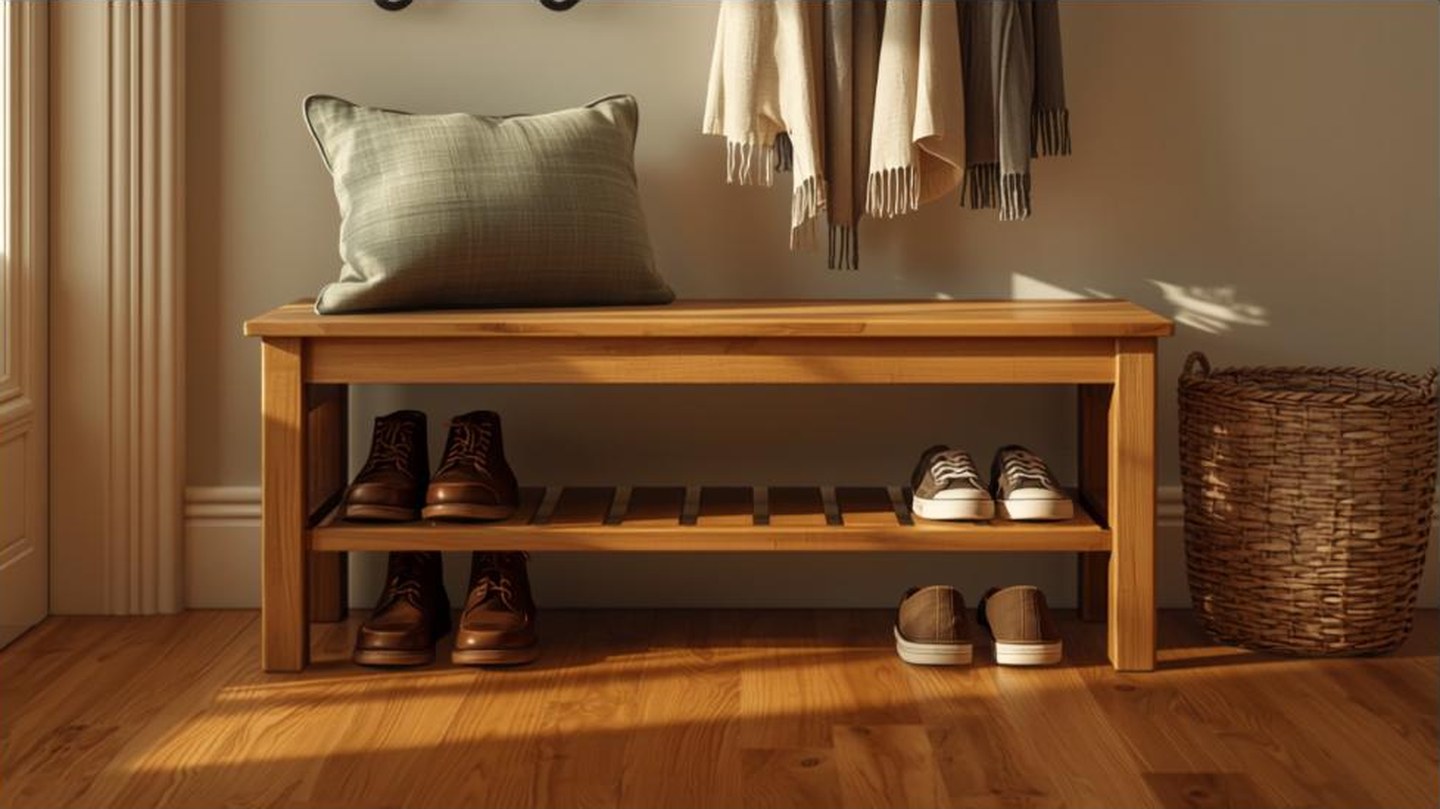
When you want shoes hidden rather than just off the floor, a slim shoe cabinet is the answer: a shallow unit, often ten to fifteen inches deep, with tilt-out drawers that stand shoes on edge behind a clean front along the wall. Two things the sleek photos won't tell you: the tilt-out design rarely fits tall boots, and real capacity runs lower than it looks, so measure and count. A storage bench trades some capacity for a seat, so you sit to put shoes on while they live inside, retiring a rack and a hall chair at once. Either keeps tidy the first thing you see coming home.
Closet & under-bed storage
For the shoes out of daily rotation, the closet and the space under your bed do the heavy lifting. A stackable rack turns the closet floor's wasted vertical air into two or three tiers, and clear stackable boxes protect pairs while climbing the wall. Under the bed, a low organizer or a wheeled drawer swallows off-season and special-occasion pairs, the same real estate we cover in our under-bed storage guide. Measure your clearance first, since platform and low frames may not leave room. Send what you rarely wear here so the entryway only holds this week's shoes.
Curate before you store
Before buying a single organizer, do the free step: pull every pair and be honest about what you actually wear. Most of us keep shoes we haven't touched in a year, and no system beats owning fewer. Curating first often reveals the entryway wasn't too small, it was holding several times the shoes it needed to. Then size the storage to the pairs that survive the cut, not the pile you started with.
Common questions
How many pairs should I keep by the door?
Roughly one person's week of rotation, maybe five or six pairs each. Everything else (off-season, dressy, rarely worn) belongs in the closet or under the bed. Hold the entryway to a single week and it stops overflowing on its own.
How do I store tall boots in a small space?
Boots defeat pockets and tilt-out cabinets, so give them their own plan: stand them upright with boot shapers on an open shelf, hang them from boot clips on the closet rod, or lay them flat in a long under-bed box. Standing saves the most floor; laying flat hides them best.
Should I air shoes out before storing them in a closed cabinet?
Yes. Damp shoes sealed behind a cabinet front or lidded bench turn musty fast, gym and rain shoes especially. Air them overnight on an open rack first, and leave a small vent gap if the cabinet is fully enclosed.
Our product picks
Simple Houseware 24-Pocket Over-the-Door Shoe Organizer
Hangs on any door in seconds and holds a dozen or so pairs on space you weren't using. No floor cost, no tools, and it comes down clean at move-out. Best for flats and sneakers rather than tall boots.
Check price on Amazon →40" Narrow Shoe Cabinet (Slim Entryway)
Shallow tilt-out drawers stand shoes on edge behind a clean front, tucking a collection into ten to fifteen inches of depth. Measure and count pairs first, and skip it if you own tall boots.
Check price on Amazon →HOOBRO Shoe Storage Bench with Cushion (39")
A seat and a shoe store in one footprint, so you sit to put shoes on while they wait inside, retiring a rack and a hall chair. Good for the entryway if you have room for it.
Check price on Amazon →Vertical or hidden, this season by the door, and a ruthless cull before you buy a thing. Do that and the pile that greets you at the door, and buries your closet floor, has a much harder time forming.